
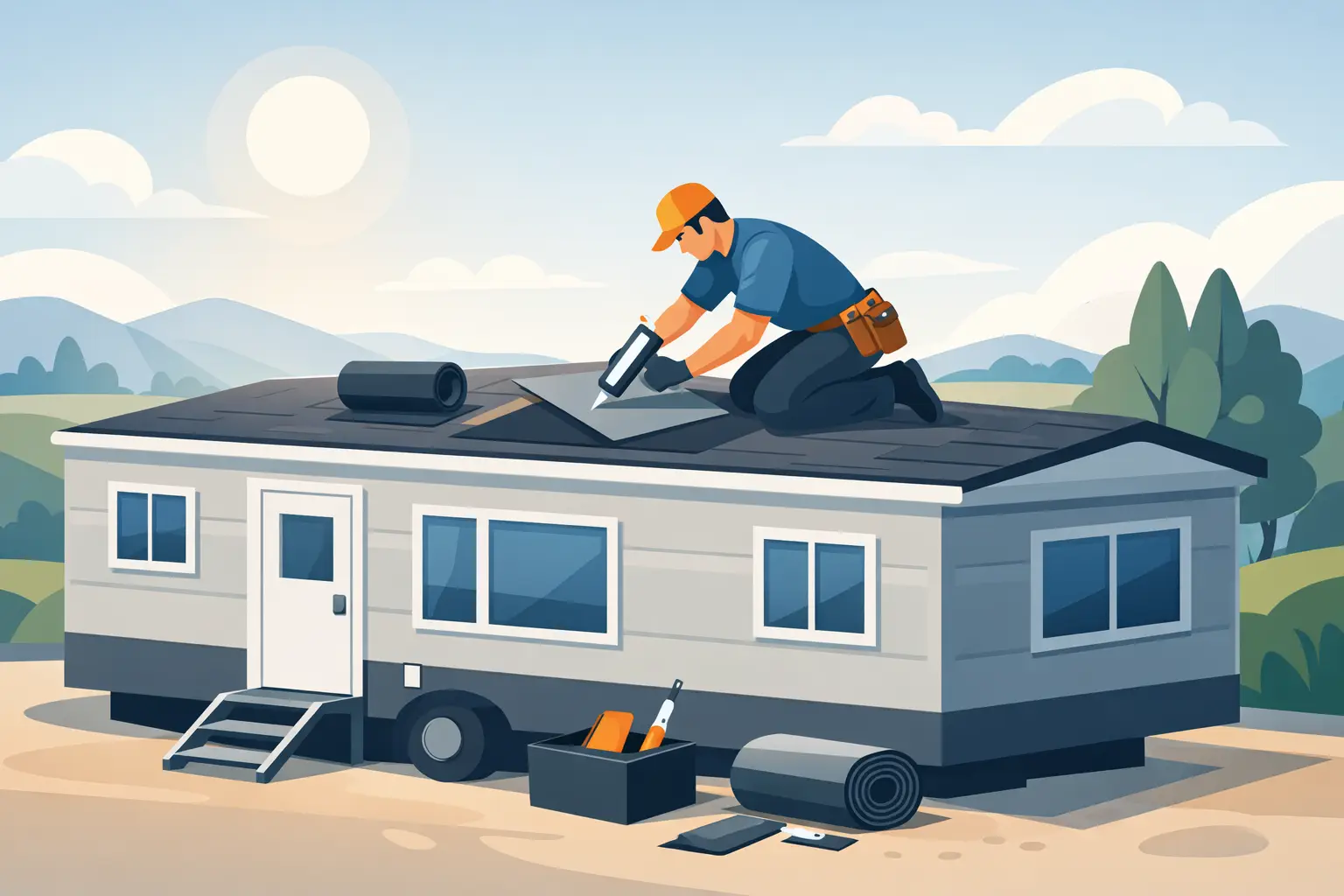
Trailer Home Roof Repair That Lasts
A small ceiling stain after a Florida rainstorm rarely stays small for long. On a trailer home, even a minor leak can spread fast through insulation, ceiling panels, and wall seams. That is why trailer home roof repair needs more than a quick patch. It takes the right materials, a proper fit, and a repair plan built for the way these homes are actually constructed.
Trailer homes have different roofing needs than site-built houses. Their roof systems often have lower slopes, lighter structural framing, and dimensions that call for custom-fit solutions instead of standard residential roofing methods. In Florida, that difference matters even more. Heat, heavy rain, humidity, and storm exposure can turn an aging roof into an expensive problem if repairs are delayed or handled like a one-size-fits-all job.
Why trailer home roof repair is different
The biggest mistake homeowners make is assuming any roofer can treat a trailer home roof like a conventional roof. In many cases, that leads to poor material choices, weak edge details, or repairs that do not account for movement, attachment points, and drainage patterns.
Trailer home roofs may be metal, coated systems, membrane-based assemblies, or roof-over structures. Each has its own repair approach. A metal roof with loose fasteners and seam failure needs a different solution than a flat or low-slope roof with ponding water and coating breakdown. Even when two homes look similar from the outside, the repair details can be very different once the roof is inspected.
That is why accurate diagnosis matters. A leak around a vent, for example, may not be caused by the vent itself. Water can travel from a seam, an attachment point, or a cracked section of coating before it becomes visible indoors. A surface patch may stop the symptom for a short time, but it will not solve the source if the surrounding roof system is already failing.
Common signs your roof needs attention
Some roof problems announce themselves with a steady drip. Others show up quietly. A musty smell, soft ceiling panel, bubbling coating, rusted fasteners, or higher indoor humidity can all point to roof trouble.
Outside, homeowners often notice cracked sealant, lifted seams, rust spots, sagging areas, or discoloration where water tends to collect. After a storm, even a roof that looks mostly intact can have new vulnerabilities around edges and penetrations. Florida winds and driving rain are especially hard on older trailer home roofs because weak points tend to open up under pressure.
If your roof is more than a few years into its service life and you are seeing repeat leaks, the issue may be larger than one isolated repair. At that stage, the smartest move is not always the cheapest short-term fix. It depends on the roof condition as a whole.
What a proper repair should address
A quality repair does more than cover a damaged spot. It restores protection in a way that matches the roof system and extends its useful life.
That usually starts with inspection. The roof surface, seams, flashing, vents, edges, and structural condition all need to be evaluated together. If water has already entered the assembly, damaged substrate or insulation may also need to be replaced. Repairing only the top layer while leaving trapped moisture underneath can shorten the life of the whole roof.
For some trailer homes, repair means resealing seams, replacing fasteners, treating rust, reinforcing penetrations, and applying a compatible coating system. For others, it may involve replacing damaged panels or sections of membrane. And when wear is widespread, a roof-over or full replacement may make more financial sense than repeated service calls.
The trade-off is simple. A targeted repair costs less upfront, but only if the rest of the roof is still performing well. If the roof has multiple failure points, investing in a more complete solution can save money and frustration over time.
Patching vs. lasting repair
There is a big difference between a temporary patch and a lasting repair. A patch is usually focused on stopping active water entry as quickly as possible. That can be helpful after a storm or when immediate damage control is needed.
A lasting repair goes further. It uses materials that are compatible with the existing roof, corrects the reason the leak started, and strengthens the area so it can handle Florida weather. That may include better seam treatment, upgraded coatings, reinforced flashing details, or custom-fit materials designed for the home’s roof dimensions.
Homeowners are often tempted by low-cost patch jobs because the leak seems minor. The problem is that repeated patching can add up fast when the root issue never gets solved. If you have fixed the same area more than once, it is time to look deeper.
Florida weather changes the repair equation
Roof repair in Florida is not just about fixing damage. It is about preparing the roof to hold up under intense sun, wind-driven rain, humidity, and storm season stress.
UV exposure can dry out sealants and break down older coatings. Humidity can keep moisture trapped in vulnerable areas. Strong storms can exploit weak seams, loose edges, and aging penetrations. On trailer homes, where roof geometry and attachment details matter so much, those conditions can speed up failure if repairs are not done carefully.
That is why material selection matters. Not every sealant, coating, or panel system is suitable for a trailer home roof in a hot, wet climate. Repairs should be based on long-term performance, not just immediate appearance. The roof needs to shed water properly, resist movement and expansion, and maintain a secure fit over time.
When repair is enough and when replacement is smarter
Many homeowners ask the same question: can this roof be repaired, or is it time to replace it? The honest answer is that it depends on age, leak history, structural condition, and how much of the roof has already deteriorated.
If the problem is localized and the rest of the roof is in solid shape, repair can be the right call. That is especially true when damage is caught early. On the other hand, if leaks are recurring in different places, the roof deck is compromised, or the existing system has reached the end of its service life, replacement may offer better value.
This is where specialist knowledge really matters. Trailer homes are not ideal candidates for guesswork. A contractor who understands manufactured and trailer home roofing can help you avoid spending money on repairs that only delay a larger failure.
Choosing the right contractor for trailer home roof repair
The right contractor should understand more than roofing in general. They should understand trailer home construction, low-slope systems, custom-fit installation, and Florida weather demands.
Ask whether they regularly work on trailer homes, mobile homes, and manufactured homes. Ask how they identify leak sources, what materials they use, and whether the repair is designed for long-term performance or short-term stopgap work. Fair pricing matters, but so does fit, workmanship, and whether the proposed solution actually matches your roof type.
A specialist approach makes a difference because these homes require precision. A repair that fits poorly or uses the wrong system can create new weak points instead of solving the old ones.
For Florida homeowners, working with a company focused on these structures offers peace of mind. Tropical Seal is one example of a roofing specialist built around the needs of trailer, mobile, modular, and manufactured homes rather than treating them as an afterthought.
How to protect your roof after repairs
Once the repair is complete, a little attention can go a long way. Regular inspections after storms, prompt sealing of minor issues, and watching for interior signs like stains or soft spots can help you catch problems before they spread.
It also helps to keep realistic expectations. Even a well-repaired roof will not last forever, and older roofs need closer monitoring. But when repairs are done correctly, with the right materials and a custom-fit approach, you gain time, protection, and confidence every time the weather turns.
If your trailer home roof has started leaking, showing wear, or needing repeated fixes, the best next step is not to wait for a bigger stain on the ceiling. A careful inspection today can protect the comfort, value, and safety of your home for years to come.