
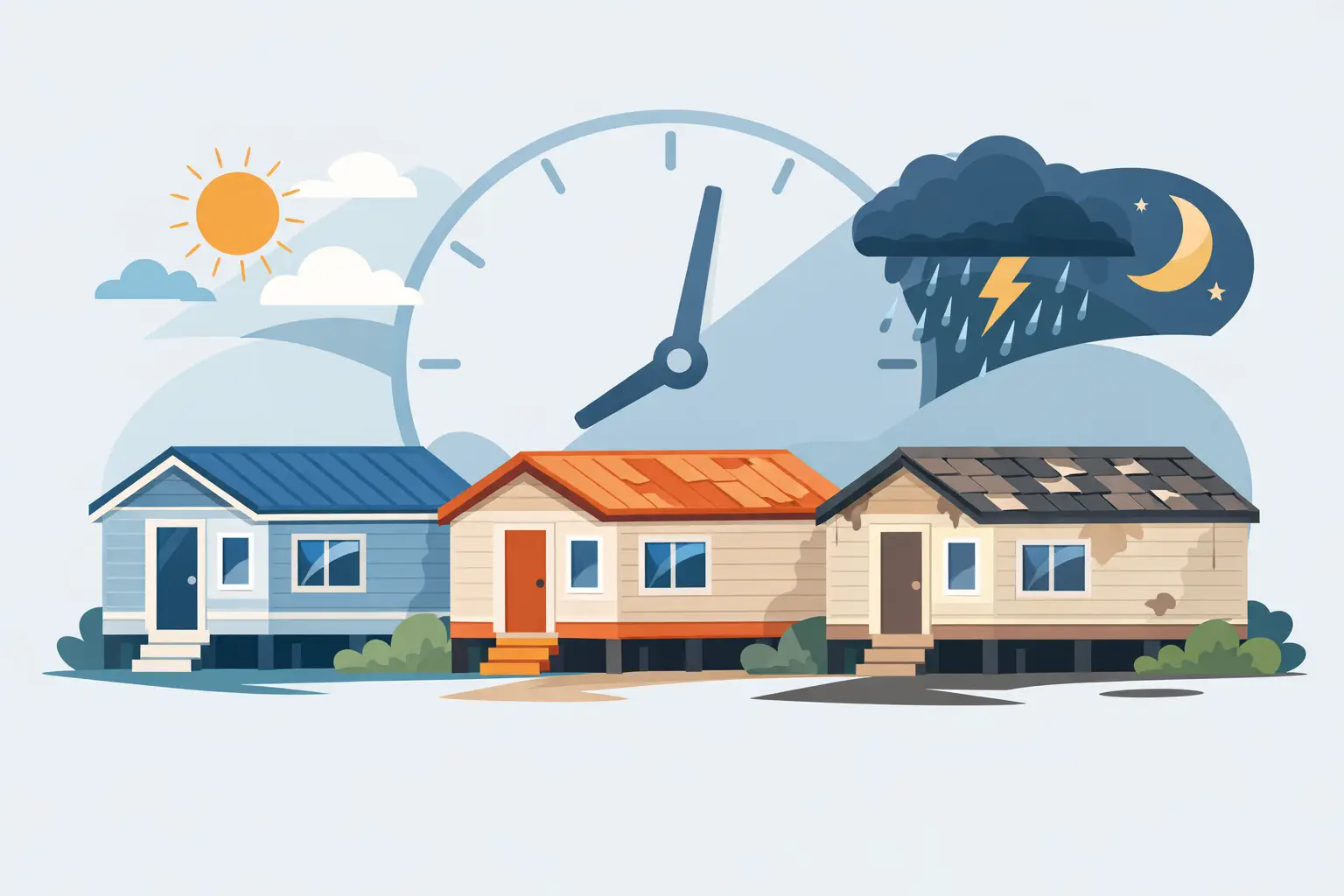
How Long Do Mobile Home Roofs Last?
If you are asking how long do mobile home roofs last, there is a good chance your roof is already giving you a reason to look closer. Maybe you have noticed a stain on the ceiling after a hard Florida rain, loose metal around the edges, or a roof that just looks tired. In most cases, a mobile home roof can last anywhere from 20 to 50 years, but that range depends heavily on the material, the quality of the installation, and how well it stands up to heat, wind, moisture, and storm exposure.
That wide range can feel frustrating when you want a clear answer. The truth is that mobile home roofing is not one-size-fits-all. A roof on a manufactured home in Florida faces different conditions than one in a milder climate, and a specialized roof system will usually perform better than a patchwork repair approach over time.
How long do mobile home roofs last by material?
The material on your roof is one of the biggest factors in its lifespan. Some mobile homes still have older metal roof systems, while others may have rubber membranes, asphalt shingles, or roof-over systems installed later.
A metal mobile home roof often lasts around 30 to 50 years when it is properly installed and maintained. Metal holds up well against sun exposure and can perform very well in Florida, but fasteners, seams, and edge details still need attention. If those weak points are ignored, leaks can show up long before the metal panels themselves wear out.
Rubber or membrane-style roofing systems, including elastomeric or single-ply options, usually last about 20 to 30 years. These systems can be a strong fit for mobile and manufactured homes because they create a continuous layer of protection and can help resist water intrusion. Their lifespan depends a lot on installation quality and whether ponding water, debris, or storm damage is allowed to sit too long.
Asphalt shingles generally last about 15 to 30 years on a mobile home, depending on the shingle quality and roof design. In Florida, intense UV exposure, humidity, and wind can shorten that timeline. Shingles can still be a workable solution in some cases, but they are not always the best long-term fit for every manufactured or trailer home.
Roof-over systems vary more than homeowners expect. If the system is custom-fit, uses durable materials, and is installed by a contractor who understands mobile home structure, it can add substantial life and protection. If it is treated like a quick cover-up over an existing problem, it may not last nearly as long as promised.
Why some mobile home roofs fail early
Age matters, but age alone does not tell the full story. Two roofs installed in the same year can have very different outcomes.
Poor fit is one of the most common issues. Mobile homes, modular homes, and manufactured homes have unique dimensions and structural requirements. A roof system designed for a conventional house may not perform the same way on these structures. When flashing, seams, drainage, or attachment methods are not right for the home, leaks and wear show up faster.
Florida weather also speeds up roof aging. Strong sun breaks down roofing materials over time. Heavy rains test every seam and penetration. Wind can loosen edges, lift materials, and create openings where water enters. Even when damage is not obvious from the ground, repeated storm exposure can reduce the life of the roof.
Maintenance is another major factor. A roof that gets inspected and repaired early will usually last longer than one that is ignored until interior damage appears. Small seam failures, rust spots, cracked coatings, or loose trim can often be corrected before they turn into expensive structural issues.
Signs your roof may be near the end of its lifespan
Sometimes a roof reaches the end of its service life gradually. Other times, it seems fine until the next storm reveals the truth.
Inside the home, warning signs include ceiling stains, peeling paint, moldy odors, or soft spots. Outside, you may see rust, lifted seams, cracked sealant, sagging areas, missing shingles, or worn coatings. Increased energy bills can also point to roofing problems, especially if damaged materials are allowing more heat into the home.
One important detail for mobile homeowners is that cosmetic wear and functional failure are not the same thing. A roof may look weathered but still have years left if the system is sound. On the other hand, a roof that looks acceptable from the driveway may have hidden moisture issues under the surface. That is why a proper inspection matters more than guessing based on appearance alone.
Can repairs extend the life of a mobile home roof?
Yes, in many cases they can. If the roof is still structurally sound and the issues are limited to certain areas, repairs can add useful life and delay replacement.
This works best when problems are caught early. Re-sealing seams, replacing damaged sections, reinforcing flashing, or restoring protective coatings can help stop water intrusion and improve performance. For a newer or mid-life roof, these repairs may be the most practical and affordable option.
But there is a point where repeated repairs stop making financial sense. If leaks keep returning, if multiple areas are failing at once, or if the roof system was never a good fit for the home to begin with, replacement often becomes the smarter long-term investment. Paying for patch after patch can cost more over time than installing a stronger system built for the home and the climate.
How long do mobile home roofs last in Florida?
In Florida, the shorter end of the normal lifespan range is often the safer expectation unless the roof has been upgraded with materials and installation methods designed for the climate. Heat, humidity, salt air in coastal areas, tropical storms, and hurricane-season wind all put more stress on a roof than average conditions in many other states.
That does not mean a mobile home roof cannot last decades in Florida. It can. But it usually takes the right material, the right fit, and the right workmanship. Specialized roofing systems tend to outperform generic approaches because they are designed with the structure and weather exposure in mind.
For homeowners in this climate, longevity is not just about material warranty language. It is about how the roof is attached, how water is directed off the home, how edges are protected, and how well the system holds up when conditions turn rough. That is where specialist experience makes a real difference.
When replacement is the better choice
A full replacement is often worth considering when your roof is older, leaking in more than one area, showing widespread wear, or has a history of recurring repairs. It is also worth considering if your current system was installed without a custom fit for a manufactured or mobile home.
A replacement gives you the chance to solve deeper problems, not just surface symptoms. That may include improving drainage, strengthening weather resistance, and choosing materials that better match Florida conditions. For many homeowners, the biggest benefit is peace of mind. A dependable roof means fewer surprise leaks, better protection during storms, and less worry every time heavy rain moves in.
If you are comparing repair versus replacement, think beyond the immediate price. Consider how long the solution is likely to last, how often you may need service again, and what water damage inside the home could cost if the roof continues to decline.
What homeowners should do next
If your roof is getting older or showing signs of trouble, the best next step is not to wait for a bigger leak. It is to have the roof evaluated by a contractor who understands mobile homes, manufactured homes, modular homes, and trailer homes specifically.
That specialized knowledge matters because these homes need more than standard roofing assumptions. They need accurate measurements, proper attachment methods, compatible materials, and a system that protects the home without creating new stress points. Companies like Tropical Seal focus on those details because long-term performance depends on getting them right from the start.
A good inspection should tell you where your roof stands today, what risks are developing, and whether repair or replacement offers the better value. That kind of clarity helps you make a confident decision instead of reacting after damage spreads.
A mobile home roof can last a long time, but it lasts longest when it is treated like the specialized system it is. If your roof is asking for attention now, dealing with it early is usually the best way to protect your home, your budget, and your peace of mind.