
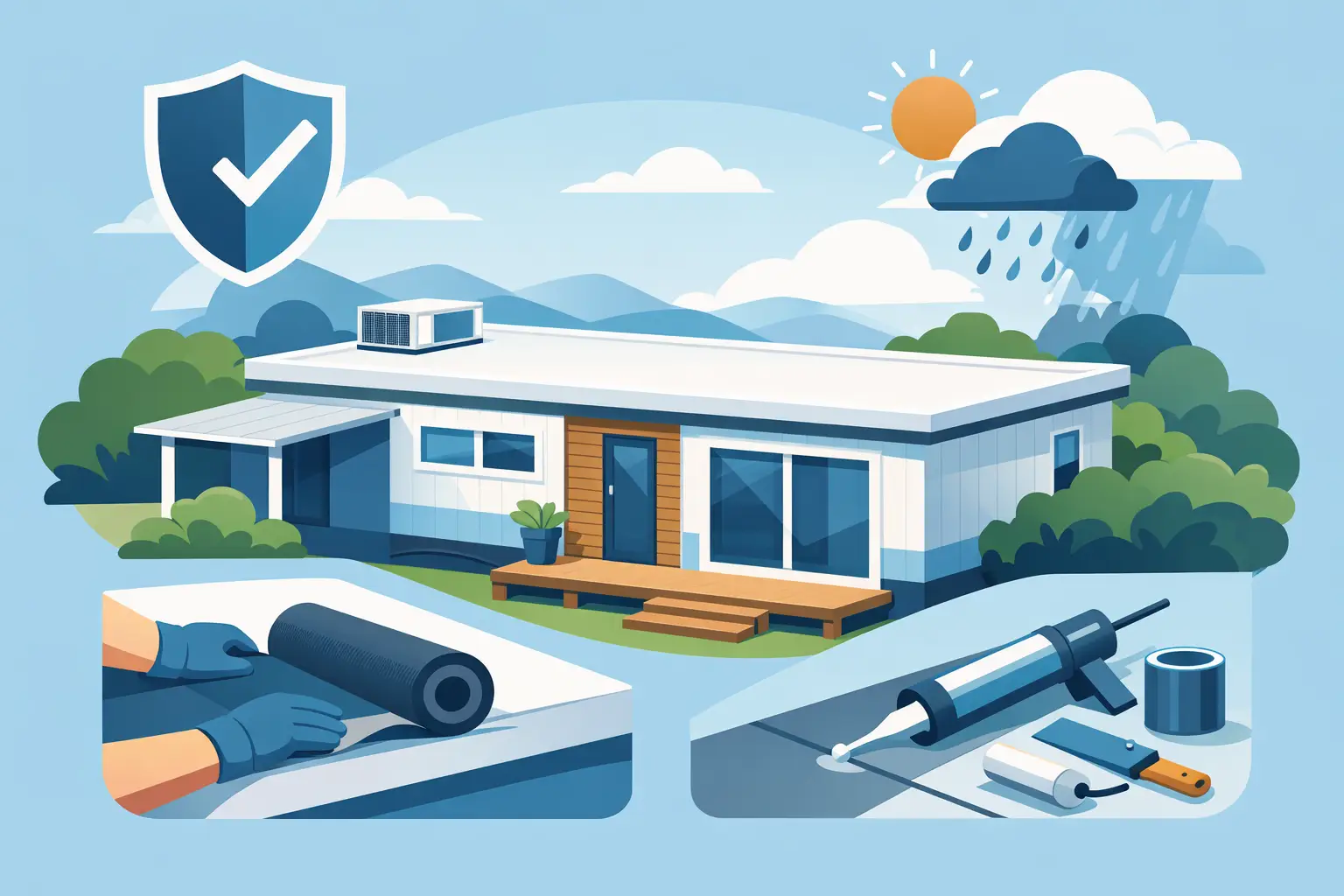
Flat Roof Mobile Home Solutions That Last
A flat mobile home roof that starts holding water after a hard Florida rain is not a small problem. It is usually the first sign that the home needs a better-fit system, not another quick patch. The right flat roof mobile home solutions are designed around how manufactured and mobile homes are built, how Florida weather behaves, and how long-term protection actually works.
For many homeowners, the challenge is not just stopping a leak. It is choosing a roof option that fits the structure correctly, holds up against heat and storms, and makes financial sense over time. A mobile home roof is different from a conventional residential roof, so the solution should be different too.
Why flat roofs on mobile homes need specialized solutions
Flat and low-slope roofs on mobile homes have a smaller margin for error than many site-built homes. When materials are poorly matched, seams are weak, or drainage is ignored, small issues can turn into repeated leaks, soft decking, insulation damage, and interior stains.
Florida adds another layer of stress. Constant sun, heavy rain, humidity, and seasonal storms wear roofing systems down faster. A roof that might last reasonably well in a milder climate can fail early here if it was not built for heat exposure and wind-driven rain.
That is why flat roof mobile home solutions should never be treated like a one-size-fits-all product. The best result comes from understanding the home’s dimensions, roof condition, structural limits, and exposure to the elements. Some homes need a protective restoration system. Others need a full replacement because the underlying roof has already reached the end of its useful life.
The most common problems with flat mobile home roofs
Many mobile home owners first notice a problem when a ceiling stain appears, but the damage usually starts earlier. Ponding water is one of the most common warning signs. Even a slight low area can keep water sitting on the roof after rain, which increases wear on seams and coatings.
Cracks, bubbling, loose flashing, rust on metal components, and soft spots underfoot also point to trouble. In older homes, roof systems may have been repaired several times with incompatible materials. That can create a patchwork surface that looks manageable from a distance but fails during the next storm.
There is also the issue of poor fit. Mobile and manufactured homes require roofing systems that align with their exact dimensions and edge details. When a contractor uses a general approach, the roof may not seal properly around transitions, vents, or perimeter areas. That is often where leaks begin.
Flat roof mobile home solutions that make sense
The right solution depends on the age of the roof, the extent of damage, and your goals. If the roof is structurally sound and the main issue is surface wear, a roof-over or restoration system may be a practical option. If water has already compromised the deck or insulation, replacement is usually the smarter long-term decision.
Roof coatings and restoration systems
A coating system can help extend the life of an existing flat or low-slope mobile home roof when the substrate is still in good shape. These systems are designed to seal minor problem areas, improve weather resistance, and reflect heat. In Florida, that added UV protection can reduce the stress that direct sun puts on roofing materials.
Still, coatings are not a cure-all. If there are active leaks caused by structural damage, widespread rot, or badly deteriorated seams, coating over the problem only delays the real repair. A careful inspection matters more than a low upfront price.
Roof-over systems
A roof-over creates a new protective layer over the existing roof. For many mobile homeowners, this can be an effective way to improve durability and performance without a full tear-off. A well-designed roof-over can add insulation value, reduce leak risk, and create a cleaner, longer-lasting surface.
The key word is well-designed. A roof-over system needs to be custom-fit to the home, with attention to edge securement, drainage behavior, and compatibility with the existing structure. Done correctly, it can be an excellent investment. Done poorly, it can trap moisture or shift problems out of sight until repairs become more expensive.
Full roof replacement
When a flat mobile home roof has widespread damage, full replacement is often the most reliable answer. This is especially true when repeated repairs have not solved leaks, the decking is soft, or the roof has simply aged beyond recovery.
Replacement gives you the chance to correct underlying issues instead of covering them up. It also allows for a system built specifically for your home’s dimensions and Florida’s weather demands. While the upfront cost is higher than a patch or coating, replacement often saves money in the long run by reducing recurring repairs and interior damage.
What materials perform best in Florida
Not every roofing material handles Florida conditions equally well. Strong sun exposure, wind, rain, and humidity all affect performance. For flat and low-slope mobile homes, material selection should focus on waterproofing ability, heat resistance, and long-term durability.
Elastomeric systems are popular because they can create a flexible, reflective surface that handles temperature swings well. Metal roof-over systems also appeal to many homeowners because of their longevity and storm resistance. In some cases, membrane-based systems may be suitable if they are installed with the right detailing and securement.
There is no universal best material for every home. A newer roof with light wear may be a good candidate for restoration, while an older home with recurring leaks may benefit more from a complete replacement or engineered roof-over. The right recommendation should come from the roof’s actual condition, not from a standard sales pitch.
How to tell if repair is enough
Homeowners often ask the same fair question: can this be repaired, or do I need a new roof? The honest answer is that it depends on how far the damage has spread.
If the issue is limited to a small area, the materials are still in decent condition, and the roof has years of service life left, repair may be enough. If leaks are showing up in multiple places, water has been sitting on the roof for a long time, or the roof has already had several short-term fixes, replacement or a more comprehensive system is usually the better path.
A trustworthy contractor should explain both the short-term fix and the long-term cost picture. Sometimes a low-cost repair is the right move. Other times it becomes the expensive choice because it only buys a few more months before larger work is needed.
Why custom fit matters on a mobile home roof
One of the biggest differences between a specialist and a general roofer is how they approach fit. Mobile homes, manufactured homes, and modular structures are not standard site-built houses. Their rooflines, edge details, framing, and attachment points require more precise planning.
That is why custom measurements and specialized installation matter. A roofing system that is tailored to the structure is more likely to seal properly, handle movement, and deliver dependable performance over time. It also reduces the chances of weak areas around seams, penetrations, and perimeter edges.
For homeowners, this matters in practical terms. A properly fit roof means fewer callbacks, better storm protection, and more confidence every time the weather turns rough.
Choosing a contractor for flat roof mobile home solutions
Experience with conventional roofing does not automatically translate into expertise with mobile homes. When evaluating contractors, look for one that understands the structural differences of manufactured housing and has a clear process for inspection, material selection, and installation.
You also want straightforward communication. Homeowners should know what condition the roof is in, what options are realistic, and what trade-offs come with each option. Fair pricing matters, but so does knowing exactly what you are paying for.
Tropical Seal focuses on these specialized roof systems because mobile and manufactured homes need a different level of attention than standard homes. That specialist approach helps homeowners get a roofing solution built for their structure, not a generic product adapted at the last minute.
Protecting your home before the next storm season
If your flat mobile home roof is showing signs of age, waiting rarely improves the situation. Small roof issues tend to grow quickly in Florida, especially when rain and heat keep working on the same weak points. Taking action early gives you more options, whether that means a repair, a restoration system, or a full replacement.
The best roofing decision is the one that matches your home, your budget, and the roof’s real condition. A dependable solution should do more than stop today’s leak. It should give you confidence that your home is protected through the next season and the one after that.