
Storm Resistant Roofing for Modular Homes
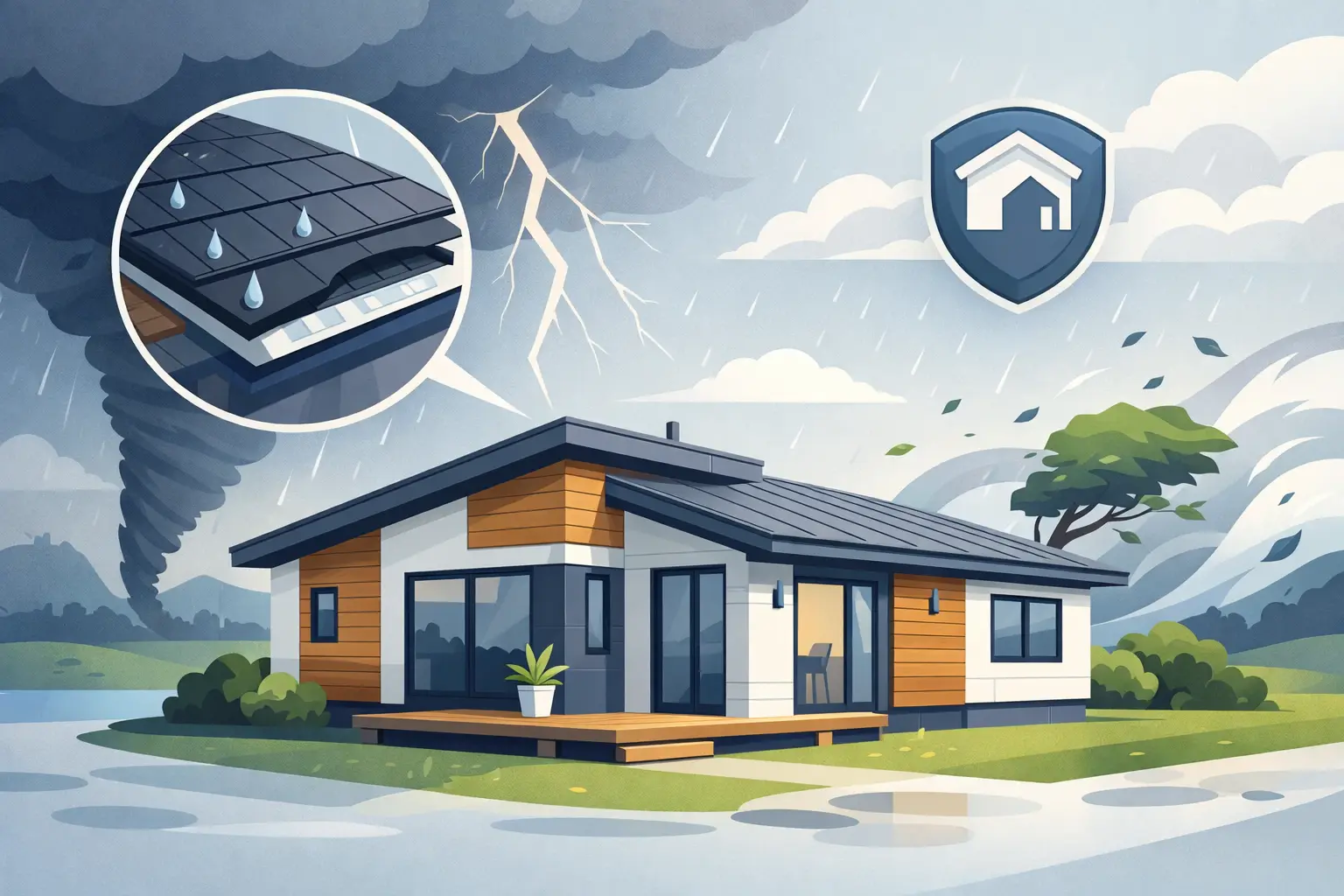
A roof that works on a standard house can still fail on a modular home if the fit, fastening, and materials are wrong. That is why storm resistant roofing for modular homes needs a specialized approach, especially in Florida, where heavy rain, high winds, and long storm seasons put every weak point to the test.
Modular homes are not an afterthought in roofing. They have their own dimensions, load considerations, connection points, and drainage needs. When a roofer treats them like a site-built home and uses a one-size-fits-all system, problems usually show up fast – lifted edges, leaks around seams, poor runoff, and premature wear.
For homeowners, the goal is simple. You want a roof that holds up during storm season, protects the structure underneath, and gives you confidence year after year. Getting there depends on more than picking a tough-looking material.
What storm resistant roofing for modular homes really means
Storm resistance is not just about surviving a named hurricane. It starts with how the roof handles repeated exposure to strong wind gusts, wind-driven rain, heat, humidity, and debris. A modular home roof has to perform under stress without allowing water intrusion or structural damage.
That performance comes from a combination of factors. Material strength matters, but so do fastening methods, edge securement, flashing details, underlayment, slope design, and the way the roof system fits the home itself. On modular and manufactured structures, precision matters more because a poor fit can create vulnerable points that storms exploit.
A storm-resistant roof should reduce the risk of uplift, limit water entry, and keep its protective layers intact even when weather conditions turn severe. It should also age well. In Florida, that is a major part of storm protection because an older, worn roof is always more vulnerable than a newer system installed correctly.
Why modular homes need a different roofing approach
Modular homes are engineered housing, but their roof systems are not always interchangeable with conventional residential roofing assemblies. The dimensions can vary, roof pitches may be lower, and some older homes have existing roof structures that need reinforcement or adaptation before a new roof goes on.
This is where specialization matters. A general roofer may know standard shingles or common residential layouts, but modular homes often require more careful planning. The roof has to align properly with the home’s frame, distribute weight appropriately, and address transitions and penetrations without forcing standard components into a non-standard shape.
That is especially true after years of sun exposure, storms, and patch repairs. In many cases, the existing roof has hidden issues such as soft decking, weakened seams, or aging flashing that need attention before a storm-resistant upgrade can do its job.
Best roofing materials for storm protection
The right material depends on the home’s design, budget, and condition, but some options consistently perform better in Florida weather than others.
Metal roofing is one of the strongest choices for modular homes when installed by a contractor who understands proper attachment and custom fitting. It offers excellent wind performance, sheds water quickly, and resists many of the problems that affect aging shingle systems. It can also be a smart long-term value because of its lifespan and lower maintenance needs.
Roof-over systems are another practical solution for many modular and manufactured homes. When engineered and installed correctly, they can add a durable new protective layer over an existing roof structure while improving weather resistance and extending service life. The key is making sure the system is designed specifically for the home and not used as a shortcut over underlying damage.
Single-ply membranes and specialized coated systems can also be effective on certain low-slope modular roofs. These products can provide strong water resistance and help seal vulnerable areas, but they are not all equal. Product quality and installation skill make a major difference in how they perform during storms.
Traditional shingles may still be an option in some cases, but they are often less forgiving in high-wind environments if the slope, fastening pattern, or edge details are not ideal. For modular homes in exposed Florida conditions, homeowners should weigh appearance and upfront cost against long-term storm performance.
The installation details that matter most
Even the best material will underperform if the installation is careless. Storm resistance is built at the detail level.
Fasteners need to be selected for the specific system and installed at the correct spacing. Too few fasteners or poor placement can lead to uplift. Flashing around vents, edges, and roof transitions must be secure and watertight. Underlayment needs to provide a reliable secondary barrier in case wind-driven rain gets past the outer layer.
Edge treatment is especially important. Roof edges are often where storm damage starts because wind pressure can get underneath and begin lifting the system. A properly secured perimeter helps the entire roof stay in place.
Drainage also deserves attention. Water that ponds or drains slowly can shorten roof life and create leak risks. On modular homes, slight design differences can affect how water moves across the surface, so the system should be planned with runoff in mind rather than assumed to work like a conventional roof.
Signs your current roof may not be storm-ready
Many homeowners do not think about storm vulnerability until they see an active leak or visible damage. By then, the roof may already be beyond a simple repair.
Warning signs often start small. Loose panels, lifted seams, rust, cracked sealant, soft spots, interior stains, and repeated patch jobs all point to a roof that may not stand up well to the next major storm. If your roof is older and has already been through multiple hurricane seasons, age alone can be a reason to schedule an inspection.
Poor fit is another common issue. If the current roof was installed without accounting for the home’s exact dimensions and structural needs, it may have weak points that are not obvious from the ground. A specialist can identify whether the roof system is truly protecting the home or just covering it.
Cost, value, and the trade-offs homeowners should know
Storm protection is an investment, and homeowners deserve clear expectations. A lower upfront price can be appealing, but the cheapest option is rarely the most affordable if it leads to leaks, interior damage, or repeated repairs after every strong weather event.
That said, the most expensive system is not automatically the right one either. It depends on the age of the home, the roof structure, your budget, and how long you plan to stay in the property. Some homeowners benefit most from a full replacement with a premium material. Others may be better served by a well-designed roof-over system that improves protection without the cost of a full tear-off.
The right contractor should be honest about those trade-offs. You want a recommendation based on fit, performance, and long-term value – not a generic sales pitch.
Choosing a contractor for storm resistant roofing for modular homes
This is where many roofing projects go right or wrong. A contractor can have years of roofing experience and still not be the right fit for a modular home.
Look for a company that understands modular, mobile, manufactured, and trailer home roofing specifically. Ask how they handle custom measurements, fastening methods, drainage planning, and storm-rated materials. Ask whether they inspect the underlying structure before recommending a system. A specialist should be comfortable answering those questions clearly.
You should also expect straightforward pricing, realistic timelines, and a focus on workmanship. In Florida, storm protection is too important for vague promises. Homeowners need a roof that is built carefully, fits correctly, and is designed for the conditions it will actually face.
That is why many homeowners turn to specialists like Tropical Seal instead of general roofing contractors. The difference is not just product selection. It is understanding how to protect non-traditional homes with systems tailored to their structure and exposure.
What to do before the next storm season
If your roof is aging, leaking, or showing signs of wear, waiting rarely improves the situation. Storm season has a way of exposing problems that seemed minor during calmer months.
A professional inspection can help you understand whether your current roof needs repair, reinforcement, or replacement. It can also show whether your home would benefit from a more storm-resistant system designed specifically for modular construction. That kind of clarity helps you make decisions before an emergency forces them.
The best time to strengthen your roof is when the sky is clear and you still have options. A modular home deserves more than a generic roofing job. It deserves a roof built to fit, built to last, and built to protect what matters most when Florida weather starts pushing hard.