
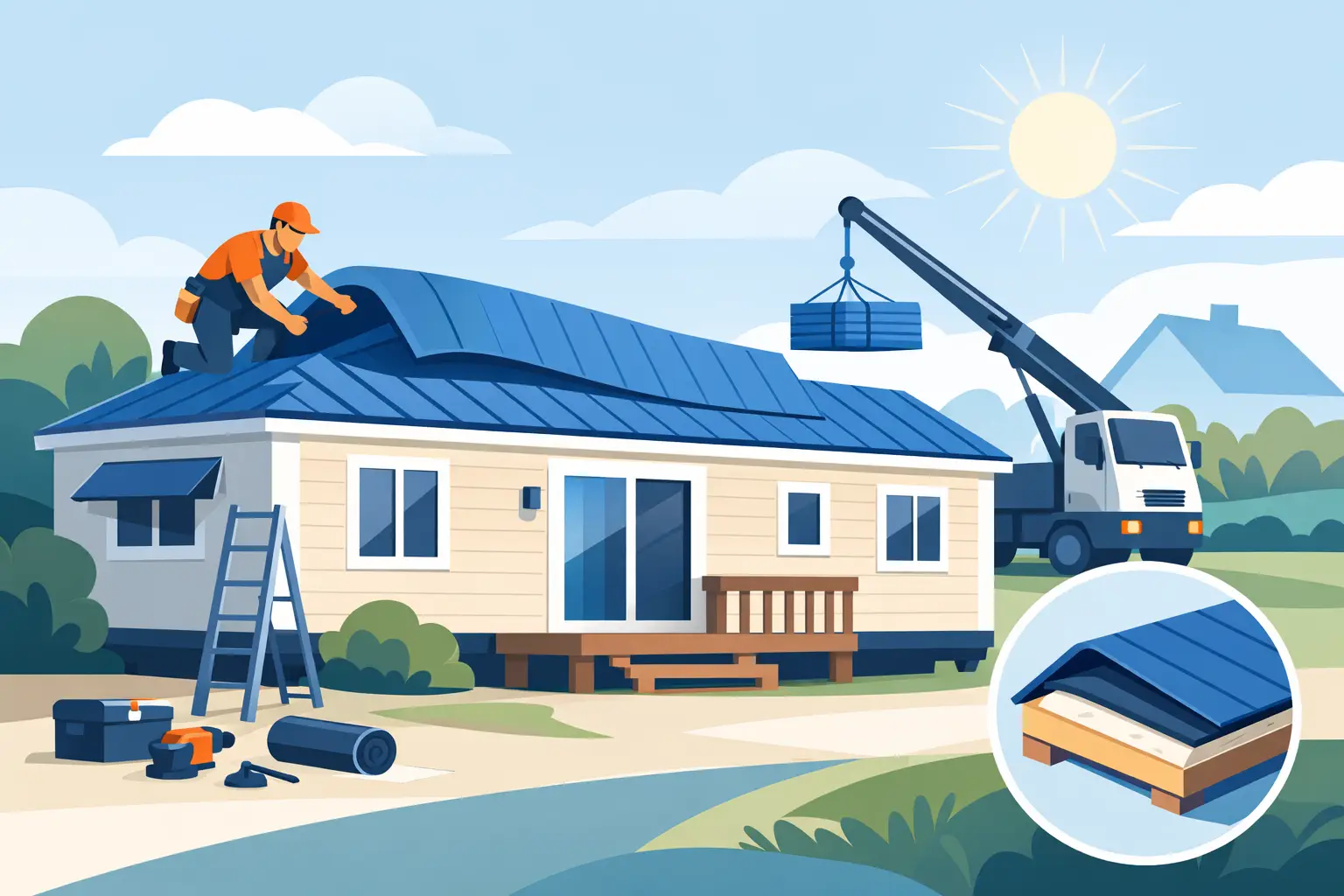
Custom Fit Mobile Home Roofing That Lasts
A mobile home roof that is even slightly off can become a big problem fast in Florida. Heavy rain, high humidity, harsh sun, and storm season do not give roofing mistakes much room. That is why custom fit mobile home roofing matters. It is not just about putting new material on top of an old roof. It is about building a roofing system that matches the home’s exact dimensions, structure, and weather exposure.
Mobile homes, manufactured homes, and trailer homes do not perform the same way as site-built houses. Their roof lines, framing, load limits, and drainage patterns can be very different. A standard roofing approach may look acceptable at first, but poor fit often shows up later as ponding water, loose seams, leaks around edges, or premature wear. Homeowners need a roof designed for the home they actually have, not one treated like a close enough match.
Why custom fit mobile home roofing matters
The biggest benefit of a custom-fit roof is simple: protection you can count on. When a roof is measured and built around the home’s real dimensions, the finished system sits correctly, drains correctly, and seals correctly. That reduces stress on the structure and lowers the chance of water intrusion.
Fit also affects durability. A roof that extends properly over edges, connects cleanly around vents and penetrations, and uses materials suited to the roof’s shape will typically hold up better over time. In Florida, that matters because small gaps and weak points tend to get tested hard.
There is also an efficiency factor. A well-designed roofing system can help reflect heat, reduce interior temperature swings, and limit moisture-related issues. That does not mean every custom roof will produce dramatic energy savings, but it does mean the roof can work better as part of the whole home envelope.
What makes mobile home roofs different
Mobile and manufactured homes are often built with different structural standards than conventional homes. The roof may have a lower slope, lighter framing, and a design that requires a more specialized installation method. Some homes have flat or nearly flat roof profiles. Others have bowstring, pitched, or add-on roof configurations that need careful planning.
This is where specialization matters. A contractor who mainly works on standard residential roofs may not account for the structural limits or fit requirements of a mobile home. The result can be a roof that is too heavy, poorly attached, or vulnerable where panels and trim meet.
A specialist looks at more than the surface. They consider the deck condition, insulation needs, water flow, edge details, flashing points, and how the roofing system will perform under wind and rain. That approach is especially important for older homes, where previous repairs may have hidden damage or uneven surfaces underneath.
The problem with one-size-fits-all roofing
Homeowners are often offered quick roofing fixes that sound affordable upfront. Coatings, overlays, or generic panels can make sense in some cases, but only when the roof beneath them is sound and the fit is right. If the underlying structure is damaged or the materials are not suited to the home, a cheaper fix can turn into repeat leaks and repeated repair bills.
A one-size-fits-all solution usually misses the details that make the difference. Roof edges may not seal tightly. Water may collect in areas that should drain. Fasteners may be placed without enough attention to the roof’s specific layout. None of those issues are minor once summer storms arrive.
Custom fit does not always mean the most expensive option. It means the installation is based on the actual home, its condition, and its exposure. In many cases, that is the smarter investment because it avoids paying twice for work that should have been done properly the first time.
How the custom-fit process should work
A good roofing project starts with a careful inspection and accurate measurements. That includes checking for soft spots, signs of trapped moisture, seam failure, rust, ponding areas, and damage around vents or attachments. It should also include a conversation about the homeowner’s priorities, whether that is stopping active leaks, improving storm protection, extending roof life, or upgrading an aging system.
From there, the roofing plan should be tailored to the home. Material selection matters, but so do layout, attachment methods, flashing details, and drainage design. The best result is not just a new roof surface. It is a complete system designed to perform as one.
For many homeowners, transparency matters just as much as workmanship. They want to know what is being installed, why it fits their home, what problems are being corrected, and what to expect from the finished roof. That kind of clear communication builds trust and helps homeowners make confident decisions.
Materials and design choices that affect performance
Not every roof needs the same material. The right choice depends on the home’s structure, the condition of the existing roof, budget, and long-term goals. Some homeowners need a stronger replacement system. Others may be good candidates for a protective retrofit or roof-over solution.
In Florida, weather resistance should stay at the center of the decision. Materials need to handle UV exposure, driving rain, humidity, and wind. Reflective surfaces can help with heat. Strong seams and secure edge details help with water control. Lightweight systems may be necessary where structural load is a concern.
There is always a balance between cost and lifespan. A lower-cost option may solve an immediate problem, but if it requires more frequent maintenance or has a shorter service life, it may not be the best value. A more durable system can cost more upfront while delivering fewer headaches over time. The right answer depends on the home and the homeowner, which is exactly why customization matters.
Signs your home may need a custom roofing solution
Some warning signs are obvious, like active leaks, stains on ceilings, or visible roof damage. Others are easier to miss. Higher indoor heat, mildew odors, recurring patch repairs, loose trim, or standing water after rain can all point to a roof system that is no longer performing well.
Age is another factor. Many mobile home roofs reach a point where patching becomes less practical than replacement or a properly designed upgrade. If repairs have been made over the years without a full plan, the roof may now have layers of mismatched materials and weak transition points.
Storm history matters too. Even when damage is not dramatic, repeated exposure to wind and rain can wear down seams, fasteners, and flashing. A roof that looks acceptable from the ground may still have vulnerabilities that show up during the next major weather event.
Why Florida homeowners benefit from specialist installation
Florida roofing is not just about keeping water out on a normal day. It is about making sure the roof continues to protect the home during long stretches of heat, sudden downpours, and storm-driven wind. That is why homeowners here benefit from working with a company that understands the specific needs of mobile and manufactured housing.
A specialist knows how to match roofing systems to these homes without overbuilding, underbuilding, or overlooking critical details. They understand that proper fit is not cosmetic. It affects how the roof sheds water, how long it lasts, and how reliably it protects the interior.
That focus is what sets a dedicated company apart. Tropical Seal approaches roofing for mobile, modular, manufactured, and trailer homes as a specialty, not a side service. For homeowners, that means solutions built around the structure they live in every day.
What to look for before hiring a contractor
Before choosing a roofing company, ask whether they regularly work on mobile and manufactured homes. Ask how they measure for fit, what materials they recommend for your roof style, and how they address drainage, flashing, and storm resistance. A dependable contractor should be able to explain the reasoning behind the recommendation in plain language.
It also helps to look for fairness and clarity in the estimate process. Homeowners deserve straightforward pricing, honest guidance, and workmanship that supports long-term protection instead of short-term patchwork. The goal is not just to get the job done quickly. The goal is to get the right roof on the home.
When your roof is built to fit, everything else works better. The home is better protected, the repair cycle slows down, and the next heavy Florida storm feels a little less stressful. That peace of mind is what a well-designed roof should deliver.