
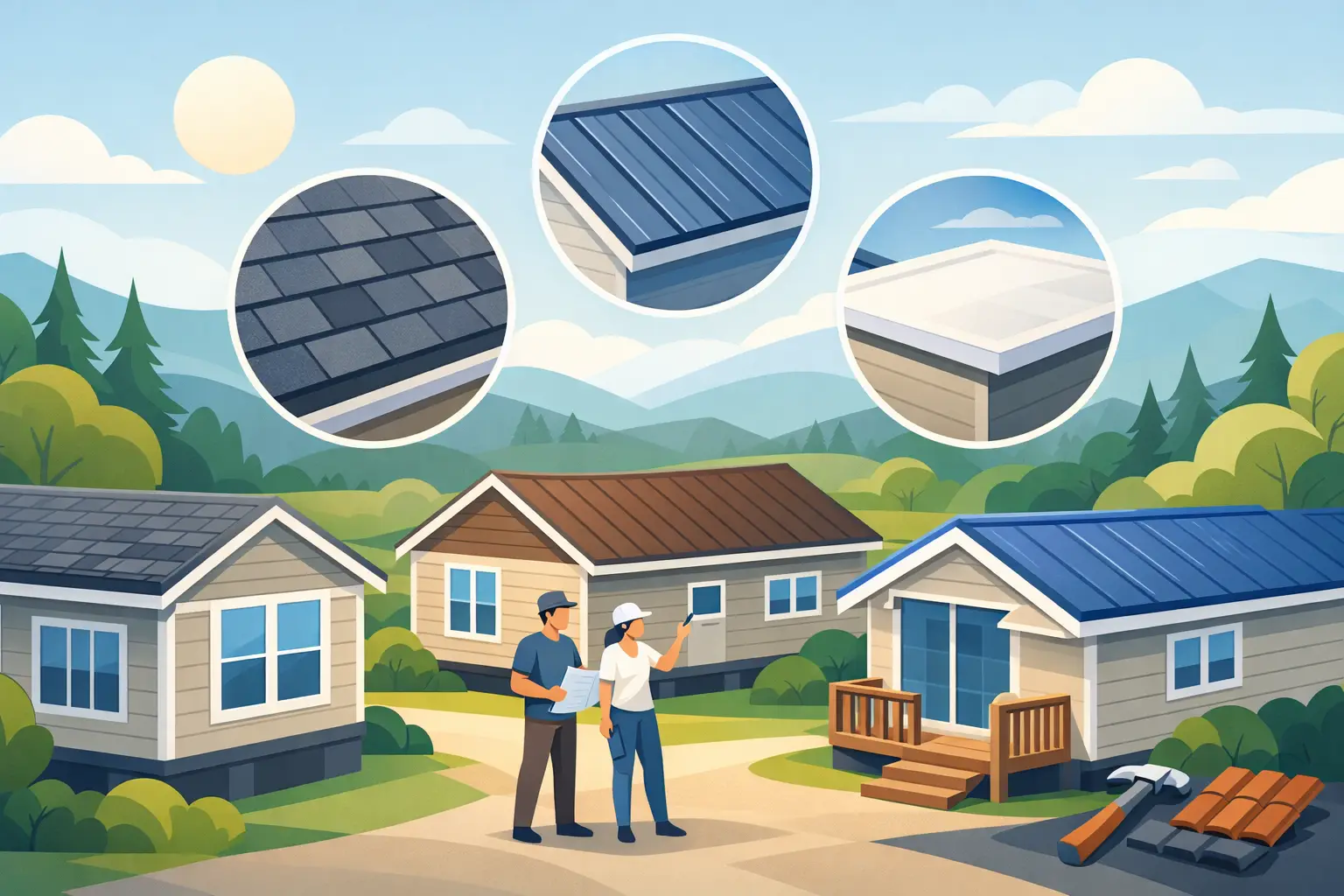
Best Roofing for Manufactured Homes
A manufactured home roof in Florida has a harder job than most. It has to handle heat, heavy rain, strong wind, and constant UV exposure, all while fitting a structure that was not built the same way as a conventional house. That is why choosing the best roofing for manufactured homes is less about picking a popular material and more about picking the right system for your home’s design, age, and weather exposure.
For most Florida homeowners, the best answer comes down to three proven options: metal roofing, TPO membrane roofing, and carefully designed roof-over systems. Each has real advantages, and each works best in different situations. If your current roof leaks, pools water, or was installed without a proper fit, the wrong replacement can create the same problems all over again.
What makes manufactured home roofing different
Manufactured homes need a more specialized approach because the roof structure, pitch, weight limits, and dimensions often differ from site-built homes. A standard roofing solution that works on a traditional house may not perform the same way on a mobile or manufactured home. Fit matters more, attachment methods matter more, and so does keeping the added weight within a safe range.
Florida conditions raise the stakes. A roof that looks fine on day one can fail early if it cannot resist uplift, reflect heat, or shed water efficiently during long storms. That is why a specialist looks beyond surface materials and focuses on how the full roofing system will perform over time.
Best roofing for manufactured homes in Florida
If you want the short answer, metal roofing is often the strongest all-around choice for long-term performance, while TPO is an excellent option for flat or low-slope roofs. Roof-over systems can also be a smart investment when the existing structure is suitable and the new system is designed specifically for the home.
The best option depends on your roof shape, budget, and the condition of the current roof deck or framing. Here is how those choices compare in real-world terms.
Metal roofing
Metal roofing is one of the most dependable choices for manufactured homes, especially in Florida. It is durable, lightweight compared with many traditional roofing materials, and highly effective at shedding water. It also holds up well under intense sun and can be engineered for strong wind resistance when installed correctly.
Another advantage is longevity. A quality metal roof can provide years of reliable protection with relatively modest maintenance. For homeowners planning to stay in their home long term, that makes metal a practical upgrade rather than just a replacement.
The trade-off is cost. Metal roofing usually requires a higher upfront investment than some other options, and installation needs to be precise. On manufactured homes, panel layout, fastening, trim work, and transitions all need to be tailored to the home’s dimensions. A poor fit can lead to leaks around edges, seams, or penetrations.
TPO roofing
TPO, or thermoplastic polyolefin, is a single-ply membrane roofing system that works particularly well on flat and low-slope manufactured home roofs. It is popular because it reflects heat, resists UV damage, and creates a clean, continuous waterproof surface when installed properly.
For Florida homeowners, that heat-reflective quality can be a real benefit. A white or light-colored TPO roof may help reduce heat absorption, which can support indoor comfort and lower cooling strain during hot months.
TPO is not the right fit for every roof design, but it is often one of the best-performing choices when the roof has little pitch. The quality of installation matters a great deal. Seams, flashing, and edge securement need to be handled with care, especially in areas exposed to heavy rain and wind.
Roof-over systems
A roof-over system involves installing a new roofing structure or membrane over the existing roof. For some manufactured homes, this can be a cost-effective way to improve protection, appearance, and energy performance without a full tear-off.
This option can make sense when the existing roof is aging but the underlying structure is still sound. It may also help address recurring leak issues caused by an outdated or poorly performing original roof. In many cases, a roof-over can add insulation value and improve water management at the same time.
Still, roof-overs are not automatically the best choice. The home must be evaluated carefully for structural condition, existing moisture damage, and weight capacity. A roof-over done without proper planning can hide problems instead of fixing them.
Roofing materials that are usually less ideal
Shingles are common on standard homes, but they are not always the best roofing for manufactured homes. They can work in certain cases, especially on manufactured homes with steeper roof pitches and proper structural support, but they are heavier than some alternatives and may not be the best match for every home.
Rolled roofing is another option some homeowners consider because of the lower upfront cost. The issue is longevity. In Florida’s climate, cheaper rolled materials may age faster, require more repairs, and offer less dependable storm performance over time.
That does not mean these materials are never used. It means they should be chosen only when they match the home’s structure and the homeowner’s expectations for lifespan and maintenance.
How to choose the best roofing for manufactured homes
The right roof starts with the right questions. Is your roof flat, low-slope, or pitched? Are you dealing with isolated leaks, widespread wear, or structural concerns? Do you want the most affordable immediate solution, or are you trying to avoid replacement again in a few years?
If your priority is long-term durability and storm resistance, metal often leads the conversation. If your home has a flat or low-slope roof and heat reflection matters, TPO deserves serious consideration. If your current roof can support a properly designed upgrade, a roof-over may provide a strong balance of value and protection.
Budget matters, but it should not be the only factor. A lower initial price can become expensive if the material is not suited to the home or climate. Repair frequency, energy performance, expected lifespan, and the quality of installation all affect the true cost of ownership.
Why installation quality matters as much as the material
Even the best roofing material can fail if it is installed like a standard house roof without considering manufactured home construction. These homes need precise measurements, appropriate fastening methods, and attention to transitions, vents, edges, and drainage patterns.
This is where specialist experience becomes valuable. A contractor who works regularly on manufactured and mobile homes is more likely to understand common roof shapes, fit challenges, and structural limitations. That leads to better recommendations and a roof system that performs the way it should.
In Florida, details like wind resistance, water shedding, and heat management are not extras. They are essential parts of the job. The goal is not just to cover the home. The goal is to protect it year after year.
Signs it may be time to replace your roof
If you notice ongoing leaks, soft spots, interior stains, loose seams, rust, sagging areas, or visible wear around penetrations, your roof may be nearing the point where repairs are no longer the smart choice. The same is true if your energy bills have climbed and your roof is no longer reflecting heat effectively.
Older manufactured home roofs often show their age gradually. A few minor issues can turn into widespread damage if moisture gets beneath the surface. Addressing the problem early usually gives you more options and helps avoid larger repair costs later.
A practical way to make the right decision
The best roofing decision is usually made after an honest inspection, not a guess. A professional evaluation can tell you whether your home is a strong candidate for metal, TPO, or a roof-over system, and whether any structural repairs are needed first.
For homeowners who want dependable protection without overspending, the smartest path is to choose a roofing system designed for the way manufactured homes are built and the way Florida weather behaves. That is the difference between a roof that simply looks new and one that truly protects your home.
If you are weighing your options, focus on fit, durability, and who is installing it. The right roof should give you more than coverage – it should give you confidence every time the weather turns.