
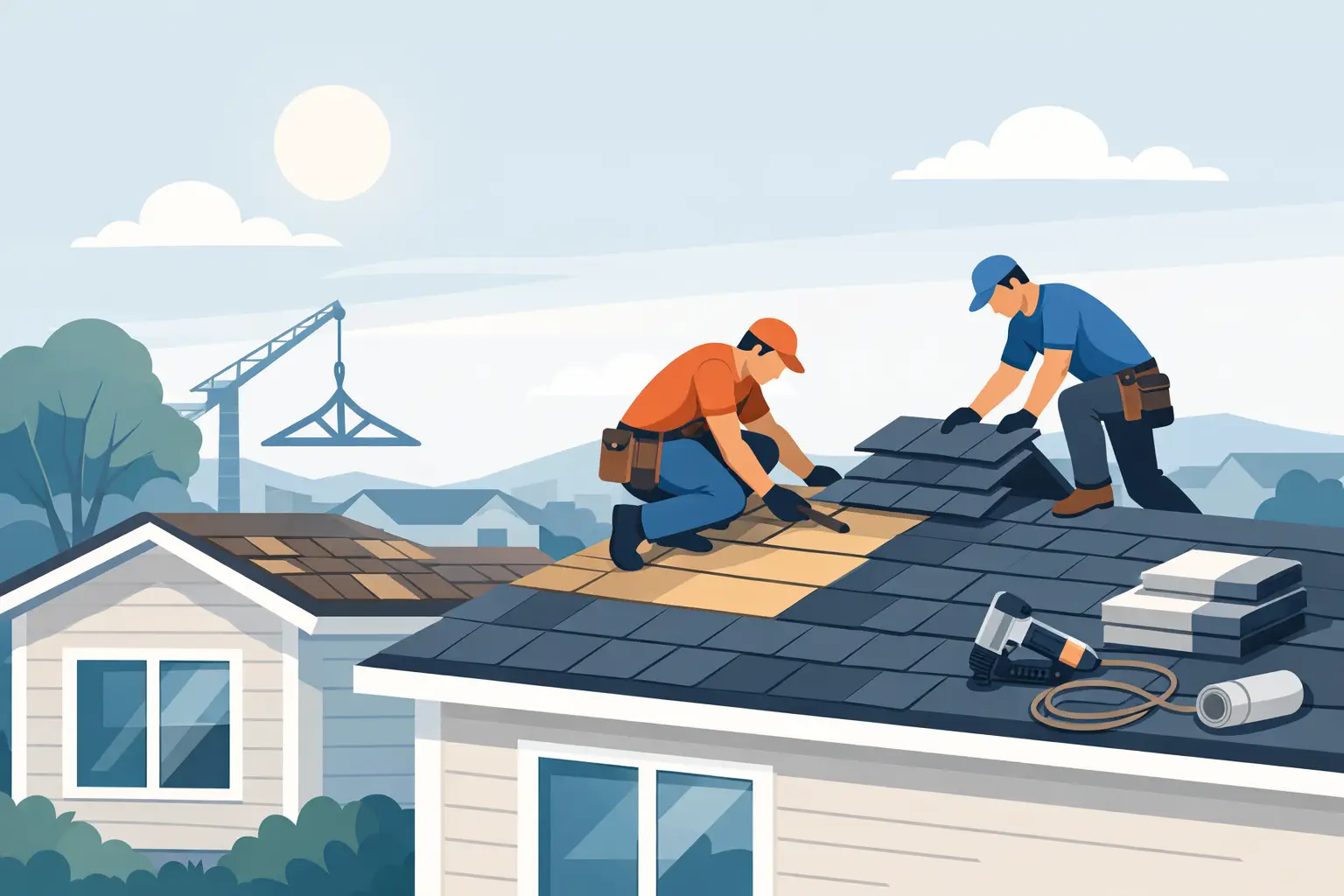
Manufactured Home Roof Replacement Guide
A roof problem on a manufactured home rarely stays small for long. What starts as a soft spot, a loose seam, or a minor leak can turn into insulation damage, stained ceilings, mold, and rising energy bills. This manufactured home roof replacement guide is built for Florida homeowners who need clear answers about when to replace, what materials make sense, and how to avoid costly mistakes.
When roof replacement makes more sense than another repair
Many manufactured home owners try repairs first, and in some cases that is the right call. A localized leak around a vent boot or a small section of damaged flashing may be fixable without replacing the full roof. But if the roof is aging across the whole surface, patchwork repairs often become a cycle of short-term spending.
The most common signs that replacement is the better investment are recurring leaks, visible sagging, rusted metal panels, soft decking underfoot, water stains that keep returning, or damage after a major storm. In Florida, sun exposure, heavy rain, and high winds can shorten the useful life of roofing materials, especially on homes that already have older or poorly fitted systems.
Age matters too, but not on its own. A well-installed roof can outlast a neglected one by years. What matters more is the condition of the structure beneath the roofing material and whether the current system still fits the home properly and sheds water the way it should.
A manufactured home roof replacement guide to material choices
Not every roofing system that works on a site-built house is the best fit for a manufactured home. The structure, pitch, framing, and dimensions of these homes call for roofing choices that are lightweight enough, properly sealed, and installed with the home’s specific design in mind.
Metal roofing
Metal remains one of the most popular options for manufactured homes, especially in Florida. It is durable, relatively lightweight, and well-suited to rain-heavy climates. A properly installed metal roof can resist corrosion, shed water efficiently, and hold up well under harsh sun.
That said, not all metal roofs perform the same. Panel quality, fastening method, underlayment, and edge detailing all affect long-term performance. Cheaper systems may save money upfront but can lead to noise, fastener issues, or premature wear if they are not matched to the home and environment.
Roof-over systems
A roof-over adds a new roofing system above the existing roof. For some manufactured homes, this can be a smart option because it improves protection and appearance without a full tear-off. It can also help with insulation and energy performance if designed correctly.
But a roof-over is not the right answer in every case. If there is hidden rot, structural damage, or trapped moisture in the original roof, covering it can make the problem worse. The existing roof has to be evaluated carefully before this option is chosen.
Membrane and specialty systems
For certain manufactured homes, membrane roofing or specialty low-slope systems may be appropriate. These can provide strong waterproofing on flatter roof profiles where water management is critical. The key is proper installation around seams, penetrations, and transitions.
This is where specialty experience matters. A roof that looks acceptable from the street can still fail early if the details are wrong around vents, edges, and tie-ins.
What makes manufactured home replacement different
Manufactured homes are not just smaller versions of site-built homes. They have specific structural limits, unique roof configurations, and dimensions that need a precise fit. A contractor who treats the project like a standard residential reroof can miss important details.
Weight is one factor. Some roofing materials may be too heavy for the structure unless modifications are made. Drainage is another. Low-slope or shallow-pitch rooflines need careful planning to prevent standing water and leaks. Fastening methods also matter because the roof system must perform under wind pressure without damaging the underlying structure.
In Florida, wind resistance is a major part of the conversation. The right roof is not just about keeping rain out on a normal day. It also needs to stand up to storm season, resist uplift, and stay watertight when the weather turns rough.
How the replacement process usually works
The first step is an inspection. A qualified roofing specialist should look at the condition of the current roof, the decking, insulation, drainage, penetrations, and any signs of structural weakness. This helps determine whether a repair, roof-over, or full replacement is the smartest path.
Once the scope is clear, material selection comes next. This is where homeowners should ask practical questions, not just price questions. How long is the expected lifespan? How will the material perform in Florida heat and rain? Is it appropriate for the pitch and structure of the home? What kind of maintenance will it need?
Then comes preparation and installation. If the old roof must be removed, the crew should inspect the deck underneath and replace any damaged sections before the new roofing system goes on. If a roof-over is being installed, the support system and ventilation details need to be handled correctly so the new roof performs as intended.
Good installation is mostly about details. Clean seams, secure flashing, proper fastening, and accurate fit around vents and edges are what separate a roof that lasts from one that becomes a problem in a few seasons.
Cost factors homeowners should expect
There is no single price for manufactured home roof replacement because the cost depends on the home, the condition of the current roof, and the material selected. Size is the obvious variable, but it is not the only one.
The final price can also be shaped by roof pitch, labor complexity, decking repairs, insulation upgrades, and whether the job involves a tear-off or a roof-over. Material choice has a major impact as well. A lower-cost option may help with immediate budget needs, while a premium system may offer better long-term value through durability and reduced maintenance.
For many homeowners, the right question is not what costs the least today. It is what gives the best protection over time. Replacing a roof once with the right system is usually more affordable than paying for repeated repairs, interior damage, and energy loss.
How to choose the right contractor
This part matters as much as the roofing material itself. Manufactured homes require a different level of fit and planning than general residential roofs, so experience with these structures should not be optional.
Ask whether the contractor regularly works on manufactured, mobile, modular, or trailer homes. Ask how they handle low-slope designs, storm protection, and custom-fit installation. Ask what they look for during inspection and how they determine whether a roof-over is safe or if a full replacement is needed.
You should also expect clear communication. A dependable contractor explains the condition of the current roof, outlines realistic options, and gives you a written estimate without pressure. Fair pricing matters, but so does confidence that the crew knows exactly how to protect your home.
For Florida homeowners, a specialist approach is often the safest route. Companies like Tropical Seal focus on the roofing needs of non-traditional homes because those needs are not identical to standard residential projects.
Common mistakes to avoid
The biggest mistake is waiting too long. A roof leak rarely fixes itself, and water damage spreads quietly. By the time stains appear indoors, the problem may already involve insulation, decking, or framing components.
Another mistake is choosing based on price alone. The cheapest proposal can become the most expensive if the material is a poor fit, the installation is rushed, or storm protection is weak. Manufactured homes need custom-fit workmanship, not generic shortcuts.
It is also a mistake to assume every aging roof needs the same solution. Sometimes repair is enough. Sometimes a roof-over is efficient. Sometimes full replacement is the only sound answer. The right decision depends on the roof’s condition, the home’s structure, and how much long-term protection you want.
Planning for long-term protection
A new roof should do more than stop current leaks. It should improve your confidence every time heavy rain moves in. That means choosing a system designed for your home’s dimensions, your local weather, and your long-term budget.
If you own a manufactured home in Florida, roof replacement is not just a maintenance project. It is a protection decision. The best results come from acting early, choosing materials carefully, and working with a contractor who understands exactly how these homes are built. A roof that fits right and performs well gives you something every homeowner wants – fewer worries when the next storm shows up.