
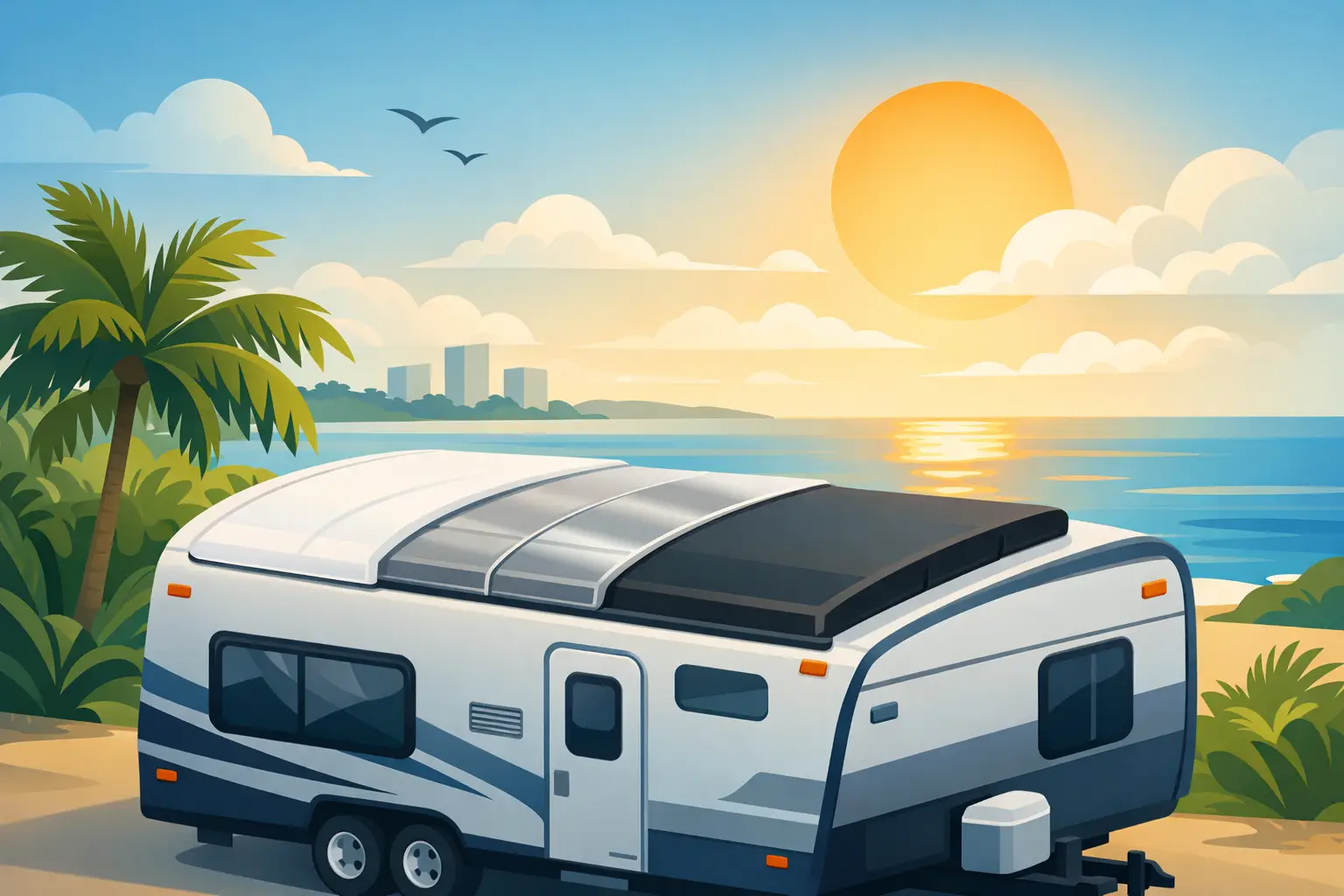
Best Materials for Trailer Roofs in Florida
A trailer roof in Florida has a harder job than most. It must manage intense sun, wind-driven rain, humidity, and the occasional severe storm without adding unnecessary weight to the home. The best materials for trailer roofs are not simply the products with the longest warranty. They are the materials that fit the roof’s slope, structure, drainage pattern, and local wind requirements.
For mobile homes, manufactured homes, and trailer homes, a proper roofing decision starts with the condition of the existing roof. A small leak around a vent may call for a targeted repair. Widespread corrosion, soft decking, recurring leaks, or an aging flat roof may point to a full replacement or a custom roof-over system. The right choice protects the home without creating hidden structural or moisture problems.
What Trailer Roof Material Must Handle in Florida
Many trailer and manufactured homes have low-slope or gently pitched roofs. That design affects how water drains and which materials can perform reliably. Materials intended for steep conventional roofs are not always suitable on a low-slope trailer roof, where standing water and slow drainage can shorten the life of the system.
Florida weather adds another layer of concern. High heat can expand roofing materials, ultraviolet exposure can dry and crack unprotected surfaces, and wind can work under loose edges or improperly fastened panels. A roofing system also needs correctly detailed flashing around vents, pipes, seams, and roof edges. Even an excellent material can fail early if it is installed without a precise fit.
Weight matters as well. Manufactured and mobile homes are engineered differently from many site-built homes. Before installing a new roof over an existing one, a qualified specialist should assess the framing, decking, current roof condition, and the added load of the proposed system.
Best Materials for Trailer Roofs: The Leading Choices
Metal roof-over systems
For many Florida trailer homes, a custom-fit metal roof-over is one of the strongest long-term options. These systems typically use durable metal panels installed over the existing roof structure with insulation or an air space designed into the assembly. The result is a new protective roof that can improve weather resistance while helping reduce heat transfer into the home.
Metal performs well in direct sun and sheds rain efficiently when the roof design provides proper slope and drainage. It is also less vulnerable to the surface cracking that can affect some older roof coverings. A properly engineered and installed metal roof-over can provide dependable protection for years while giving an aging manufactured home roof a clean, finished appearance.
The trade-off is that metal roofing requires careful measuring, fastening, edge detailing, and flashing. Panels must be designed for the home’s dimensions and local wind conditions. A generic installation can leave gaps at the edges, create noise, or allow water intrusion around penetrations. Custom-fit workmanship is what makes this option perform as intended.
TPO single-ply membrane
TPO, or thermoplastic polyolefin, is a white single-ply membrane commonly used on low-slope roofs. It is a practical choice when a trailer roof has minimal pitch and needs a continuous, reflective surface. The bright finish can reflect a significant amount of solar heat, which is especially valuable during Florida’s long hot season.
TPO is installed in wide sheets, limiting the number of seams compared with some traditional roofing systems. Its seams are heat-welded, creating a watertight bond when installed correctly. This makes it a strong option for roofs with a broad, relatively flat surface and limited complexity.
Its performance depends heavily on preparation and drainage. The roof deck and substrate must be sound, and ponding water should be addressed before installation. TPO is not a shortcut for a roof with rotted decking or major structural concerns. It is a high-performing membrane when paired with a properly prepared roof assembly.
PVC membrane roofing
PVC is another single-ply option for low-slope trailer roofs. Like TPO, it is often white and reflective, helping reduce heat buildup. It uses heat-welded seams and offers excellent resistance to moisture, making it especially useful where standing water, heavy rain, and persistent humidity are concerns.
PVC generally carries a higher material cost than some alternatives, so it may not be the best fit for every budget. Still, homeowners who want a premium low-slope membrane may find that the long-term water resistance and reflective surface justify the investment. The key is choosing a system designed for the roof’s existing condition rather than selecting by price alone.
Modified bitumen roofing
Modified bitumen is an asphalt-based membrane system that has been used successfully on low-slope residential and commercial roofs for decades. It is available in rolls and can be installed with self-adhering, cold-applied, or other approved methods. For trailer roofs, it can be a dependable choice when a durable layered membrane is needed.
A reflective coating or cap sheet is particularly valuable in Florida, since dark asphalt surfaces can absorb substantial heat. Modified bitumen may be a sensible middle-ground option for homeowners who need reliable waterproofing but do not require a metal roof-over. As with other low-slope systems, seams, transitions, and flashing details deserve close attention.
Aluminum roof systems
Aluminum can be an appealing metal roofing material in coastal or high-humidity areas because it does not rust in the same way steel can. It is lightweight and can provide a long-lasting protective surface when designed for the home. For trailer homes near salt air, aluminum may offer worthwhile corrosion resistance.
However, aluminum is typically more expensive than steel, and it still requires proper fastening and professional installation. The best material is not always the most expensive one. It is the material that provides the right balance of durability, weight, budget, and weather performance for the individual home.
Materials That Need Extra Caution
Asphalt shingles are familiar and widely available, but they are not automatically the right answer for a trailer home. Shingles work best on roofs with sufficient slope and structural capacity. They can add considerable weight, and their effectiveness depends on proper underlayment, ventilation, and drainage. Installing shingles over a low-slope manufactured home roof without an engineered plan can lead to leaks and premature wear.
Roof coatings also require an honest assessment. Silicone, acrylic, and elastomeric coatings can extend the service life of a roof that is still structurally sound. They can seal minor surface issues, reflect heat, and provide cost-effective maintenance. But a coating does not repair rusted metal, deteriorated decking, failed seams, or trapped moisture. If the roof is already compromised, coating over the problem may only delay a larger repair.
How to Choose the Right Material for Your Home
Start by looking beyond the visible leak. Water can travel beneath an older roof covering, so the spot where it appears inside may not be where it entered. A professional inspection should check the roof surface, seams, fasteners, flashing, roof edges, drains or gutters, and any signs of sagging or soft decking.
Then consider the roof shape. A nearly flat roof often benefits from TPO, PVC, modified bitumen, or a purpose-built roof-over system. A gently pitched roof may be well suited to custom metal panels. If the home is in a coastal community or an area exposed to strong winds, corrosion resistance and wind-rated attachment details become even more important.
Budget should be considered over the full life of the roof, not only the initial invoice. A low-cost patch may be appropriate for an isolated issue. Repeated repairs on an aging roof can become more expensive than installing a durable system that addresses the underlying cause. Fair pricing should include clear information about the material, installation method, scope of repairs, and expected maintenance needs.
Installation Matters as Much as the Material
The strongest roofing material cannot compensate for poor fit. Trailer homes often have unique roof dimensions, additions, awnings, vents, and transitions that require careful custom work. Properly sealed penetrations, secure perimeter edges, compatible underlayment, and correct fastener placement all influence how the roof performs in wind and rain.
Tropical Seal approaches manufactured and trailer roofing as a specialized service, not a one-size-fits-all replacement. The goal is to recommend a system that fits the home, protects the structure, and provides dependable value through Florida’s demanding weather.
A roof that is dry today is not necessarily ready for another Florida summer. Choosing a material that matches your home’s structure and having it installed with precision can turn a recurring worry into lasting protection.