
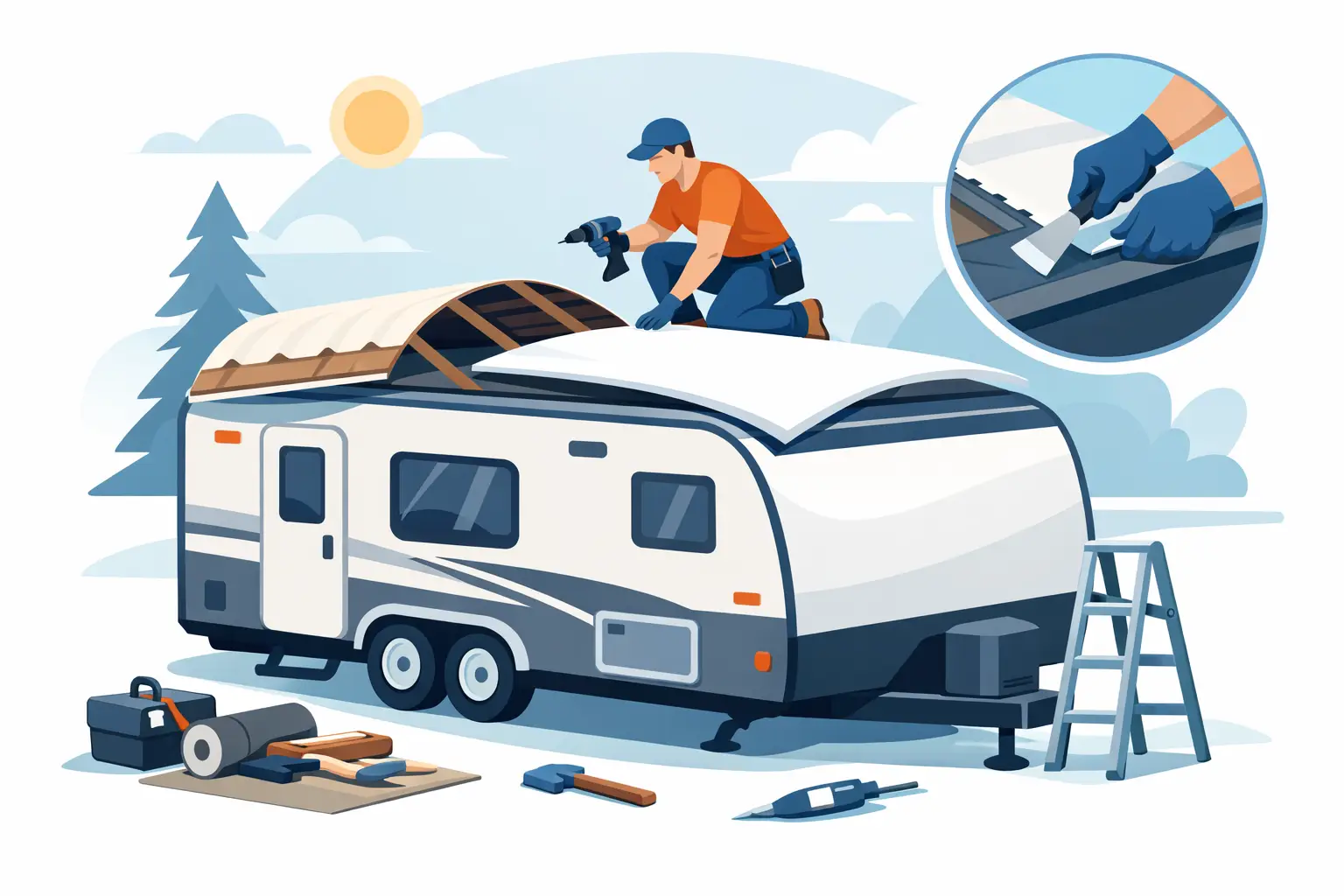
How to Replace a Trailer Roof Correctly
A trailer roof usually does not fail all at once. It starts with a soft spot near a seam, a stain on the ceiling after a hard rain, or metal that has begun to pull away around the edges. If you are looking into how to replace a trailer roof, the first thing to know is this: the job is very doable in some cases, but it is not the same as reroofing a standard house. Trailer homes, mobile homes, and manufactured homes need a roof system that fits correctly, sheds water efficiently, and holds up under Florida heat, wind, and heavy rain.
For some homeowners, replacement means installing a new roof-over system on top of the existing structure. For others, it means removing the old roofing completely and rebuilding damaged sections before new material goes on. Which route makes sense depends on the roof’s condition, the home’s framing, and whether the current problem is surface wear or structural decay.
When trailer roof replacement makes sense
A small leak does not always mean the whole roof has to go. If the issue is limited to flashing, a single seam, or minor sealant failure, a targeted repair may buy you more time. But when leaks keep returning, panels are rusting through, the roof deck feels soft, or the insulation underneath is holding moisture, replacement is usually the better investment.
Age matters too. Many older trailer roofs have already been patched multiple times. Once you have overlapping repairs, uneven surfaces, and hidden water intrusion, patching often becomes more expensive in the long run than replacing the system properly.
Florida homeowners should also think about performance, not just active leaks. A roof that technically stays dry on a calm day may still be a poor roof if it struggles in wind-driven rain or has weak edge attachment. A replacement gives you the chance to improve drainage, fastening, and weather resistance.
How to replace a trailer roof: start with a real inspection
Before any material comes off, inspect the roof from the top and from inside the home. Look for sagging areas, rust, lifted seams, punctures, cracked coatings, and signs of rot around vents and edges. Inside, check ceilings, upper wall corners, and any place where staining, mold, or softness suggests water has been traveling beyond the obvious leak point.
This part matters because trailer roof damage often spreads farther than it first appears. Water can enter at one seam and move along framing or insulation before it shows up inside. If you replace only what is visible, you risk trapping damage under the new roof.
Measure carefully as well. Trailer and manufactured home roofs are not one-size-fits-all. Width, length, slope, overhang, vent placement, and edge details all affect what system will fit and perform correctly.
Choosing the right replacement method
There are two common approaches to trailer roof replacement. The first is a full tear-off. The old roof covering comes off, damaged decking or framing is repaired, and a new roofing system is installed directly over the structure. This is the best option when the substrate is compromised or when previous leaks have caused hidden deterioration.
The second is a roof-over system. In this approach, a new metal or membrane system is installed over the existing roof with proper preparation and support. This can be a strong solution when the underlying structure is still sound and the goal is to improve protection without a full rebuild.
Neither option is automatically better. A roof-over can be cost-effective and durable, but it only works if the existing roof is stable enough to support it. A tear-off gives you a clean start, but it takes more labor and may reveal additional repairs that raise the project cost.
Best materials for a trailer roof
Material choice should match the home, the climate, and the roof shape. For many trailer homes, metal roofing remains one of the most dependable options. It is lightweight, long-lasting, and well-suited to wind and rain when installed with the right fasteners, seams, and edge details.
Membrane systems can also work well, especially on lower-slope roofs. These systems create a continuous surface with fewer exposed seams, which can help with water control. The trade-off is that membrane performance depends heavily on correct installation and proper substrate preparation.
Asphalt shingles are less common on trailer homes unless the structure has been modified to support them. They may work in some situations, but weight, pitch, and attachment all need to be considered carefully. What works on a site-built house does not always translate well to a manufactured structure.
In Florida, heat resistance and storm performance should stay at the top of the list. The right roof is not just the one that looks good on day one. It is the one that keeps performing through long summers, high humidity, and sudden weather shifts.
Removing the old roof safely
If the roof needs a full tear-off, removal should be controlled and deliberate. Start by stripping off panels, membrane, or other surface material while protecting exposed areas from sudden weather. Trailer roofs can be more vulnerable during replacement because the spans are smaller and the materials underneath may be thinner than those on conventional homes.
Once the old covering is removed, inspect the deck and framing line by line. Replace any rotten wood, rusted supports, wet insulation, or compromised fasteners. This is where many long-term roof problems are solved. A new top layer will not perform well if the base underneath is soft, uneven, or unstable.
It is also the right time to address ventilation details, vent boots, edge trim, and drainage paths. A lot of trailer roof failures happen around roof penetrations and perimeter transitions, not in the field of the roof itself.
Installing the new trailer roof correctly
A proper installation starts with a solid, dry, and level substrate. If underlayment or insulation is part of the system, it should be installed evenly with close attention to attachment and moisture protection. From there, the roofing material needs to be aligned carefully so water sheds cleanly without pooling or backing up at seams.
Fastening matters more than many homeowners realize. Too few fasteners can leave the roof vulnerable in wind. Too many, or the wrong type, can damage panels or create future leak points. Sealants also need to be used where the system requires them, but sealant alone should never be the main defense against water intrusion.
Edges, seams, and penetrations deserve the most attention. These are the places where movement, expansion, and weather exposure tend to test the roof first. A trailer roof replacement is only as good as its weakest detail.
Common mistakes homeowners should avoid
The biggest mistake is treating a trailer roof like a smaller version of a standard house roof. The dimensions, structural support, and weather behavior are different. That changes how materials should be selected and installed.
Another common issue is covering up damaged decking without repairing it. That may make the roof look finished, but it leaves the real problem in place. The same is true of relying too heavily on coatings or patch products when the roof has already reached the end of its service life.
Homeowners also run into trouble when measurements are rushed. A roof system that is even slightly off can create weak transitions, poor runoff, and exposed edges. On manufactured and trailer homes, precise fit is not a luxury. It is part of what keeps the system weather-tight.
Should you do it yourself or hire a specialist?
That depends on the scope of the work and the condition of the roof. A simple repair or coating refresh may be manageable for an experienced homeowner with the right tools and safety precautions. A full roof replacement is a different level of job.
If there is structural damage, widespread leaks, or uncertainty about the best system, it makes sense to bring in a contractor who understands trailer and manufactured home roofing specifically. General roofing experience helps, but these homes have their own requirements. The wrong approach can add weight where it should not, leave critical edges exposed, or create fit problems that shorten the roof’s lifespan.
A specialist can also help weigh the trade-offs between repair, roof-over installation, and full replacement. For homeowners who want dependable long-term protection, that guidance can save money and stress.
What to expect from cost and timeline
Trailer roof replacement costs vary based on size, material, access, and how much hidden damage is found after removal begins. A straightforward roof-over is usually less expensive than a full tear-off with deck and framing repair, but it is only the right choice when the structure underneath is still in good shape.
The timeline can range from a short project to several days, especially if weather delays or structural repairs are involved. In Florida, scheduling matters. Roofing work should be planned with rain risk and storm season in mind whenever possible.
If you are comparing bids, make sure they cover more than just the surface material. Ask what happens if rot is found, how penetrations are detailed, what attachment method will be used, and whether the system is designed specifically for trailer or manufactured housing.
A well-installed trailer roof should do more than stop leaks. It should fit the home correctly, hold up to Florida weather, and give you confidence every time the forecast turns rough. When the job is done with the right materials and the right approach, replacing the roof is not just another repair. It is a practical upgrade in protection, comfort, and peace of mind.