
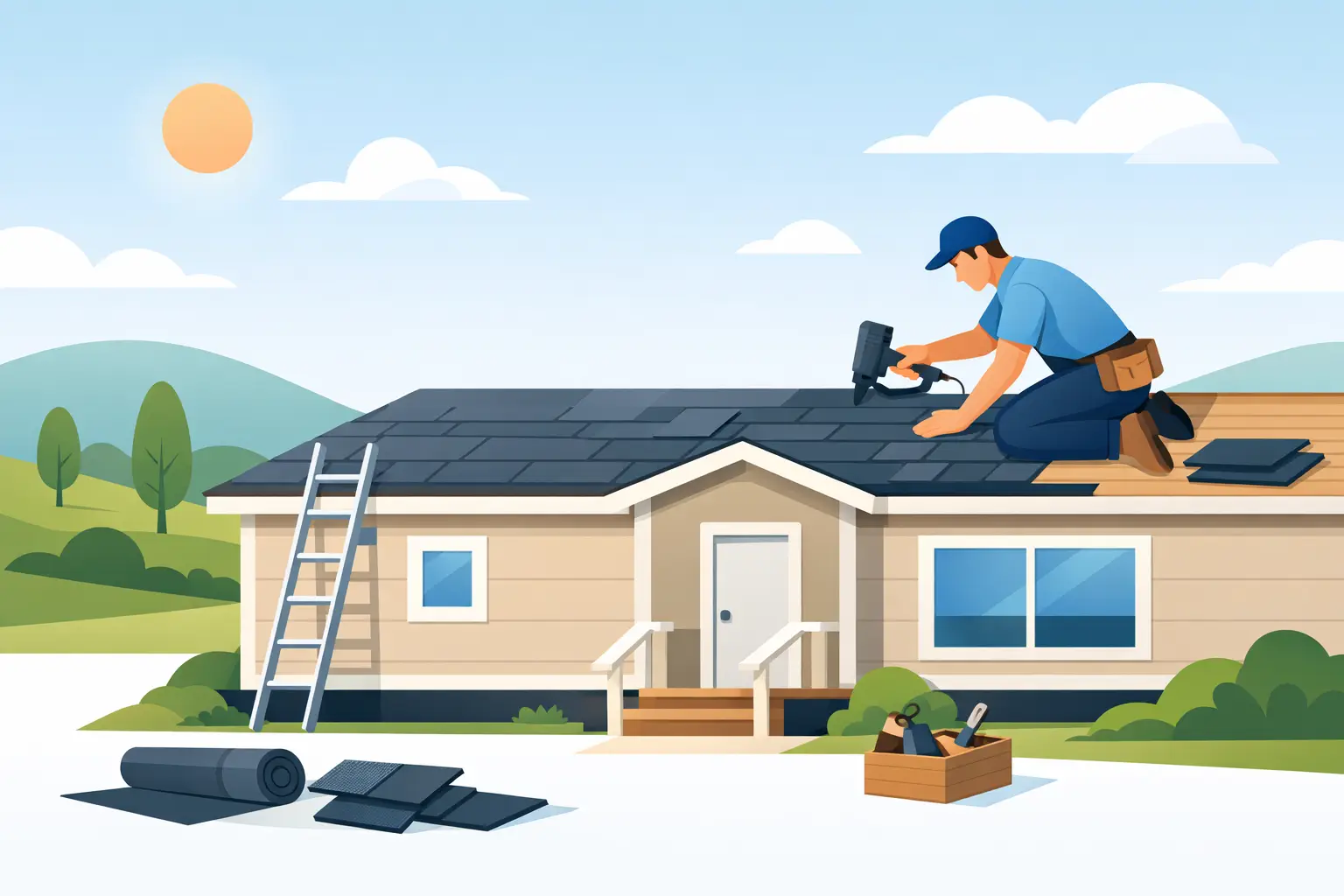
How to Roof a Mobile Home the Right Way
A mobile home roof that looks “close enough” can turn into a costly problem fast. In Florida, heavy rain, heat, wind, and constant sun exposure put extra pressure on every seam, fastener, and panel. If you are learning how to roof a mobile home, the biggest mistake is treating it like a standard house roof. Mobile and manufactured homes need a roofing system that fits the structure correctly, manages water well, and adds protection without creating new stress on the home.
How to Roof a Mobile Home Starts With the Roof Type
Before any material is ordered, you need to know what kind of roof you have. Most mobile homes have either a flat or low-slope roof, or a pitched roof added later as an upgrade. That difference matters because the right installation method for one may be the wrong choice for the other.
Low-slope mobile home roofs often use metal panels, roof-over systems, or specialized membranes. Pitched roofs may use metal or shingles, but only if the structure can support the weight and the framing is appropriate. A mobile home does not always have the same load capacity as a site-built home, so material choice should never be based on appearance alone.
If the current roof has soft decking, sagging sections, active leaks, or signs of rust around seams and penetrations, those issues need to be addressed before a new roof goes on. Roofing over damage without correcting the base is one of the fastest ways to shorten the life of the system.
Inspect the Structure Before You Install Anything
A proper roofing job starts with inspection, not installation. Check the decking, framing, edge condition, vents, plumbing penetrations, and any previous patchwork. Water stains on the ceiling may only tell part of the story. On mobile homes, leaks can travel before they show up indoors, so the visible problem is not always the source.
This is also the stage where measurements need to be exact. Mobile homes require a precise fit. Overhangs, panel lengths, trim pieces, and flashing details all need to match the dimensions of the home. A general approach can leave weak points at edges and transitions, which is where many failures start.
In Florida, wind resistance should also be part of the evaluation. A roofing system may look solid on a calm day and still perform poorly during a storm if fastening patterns, edge securement, and material compatibility are not handled correctly.
Choosing the Best Material for a Mobile Home Roof
If you want to know how to roof a mobile home for long-term value, material selection is where the decision really takes shape. There is no single best option for every home. The right choice depends on the roof shape, the condition of the existing structure, your budget, and how much weather exposure the home gets.
Metal roofing is one of the most common choices for mobile homes because it is lightweight, durable, and well suited to Florida conditions. It reflects heat well, sheds water efficiently, and can last for many years when installed correctly. It also works well for roof-over systems, which can improve drainage and extend the roof’s service life.
Membrane systems can also perform well on low-slope roofs. They offer good water resistance and can be effective when the substrate is sound and the detailing is done carefully. The trade-off is that seams, penetrations, and edge termination need close attention. A membrane roof is only as reliable as its installation.
Shingles can be used in some situations, especially on pitched roof additions, but they are not always the best fit for every mobile home. They tend to be heavier than metal, and if the structure was not designed for that load, they can create problems over time. They may also be less forgiving in areas with high wind exposure if the system is not built specifically for the home.
Preparing the Existing Roof
Once the material is chosen, the roof needs to be prepared properly. That usually means removing damaged sections, tightening or replacing loose fasteners, repairing decking where needed, and making sure the surface is clean and dry. Preparation is not the part homeowners notice first, but it often decides whether the new roof performs for years or starts failing early.
Flashing around vents, stacks, and edges should be evaluated carefully. If those components are worn, bent, rusted, or poorly sealed, replacing them is usually the better choice. Reusing weak flashing under a new roof is a short-term saving that often leads to long-term repairs.
For roof-over applications, the framing and support system must be installed evenly and securely. The goal is not just to cover the old roof. It is to create a stable, weather-resistant assembly that improves water runoff, ventilation where needed, and overall protection.
Installation Details Matter More Than Most Homeowners Realize
A mobile home roof can use quality materials and still fail if the installation details are off. Fastener spacing, panel alignment, underlayment placement, seam treatment, flashing integration, and edge finishing all play a role in how the roof holds up.
Metal roofs, for example, need correct panel overlap and fastening patterns to resist uplift and prevent leaks. Panels that are cut or fitted poorly around penetrations can leave small openings that turn into major water entry points. On low-slope systems, even minor errors in seam work can allow moisture intrusion over time.
Drainage is another major issue. Water should move off the roof cleanly without collecting around low points, penetrations, or transitions. Ponding water is a warning sign, especially on older mobile homes. If the roof design does not improve drainage, the new system may still struggle even if the material itself is sound.
Ventilation can also matter, depending on the roofing system. Some mobile home roofs benefit from improved airflow under a roof-over design, helping manage heat buildup and moisture. But ventilation is not one-size-fits-all. It needs to match the system being installed and the way the home is built.
Common Problems When Roofing a Mobile Home
Many roofing issues come from using the wrong method for the structure. One common problem is adding too much weight. Another is assuming the old roof can simply be covered without inspecting what is underneath. That can trap moisture, hide rot, and leave the new roof dependent on a weak base.
Improper flashing is another frequent issue. Mobile homes have unique edges, transitions, and penetrations, and those details need custom-fit attention. Generic trim pieces or rushed sealing work may hold for a little while, but Florida weather has a way of finding every weak spot.
Cost can also lead to poor decisions. The cheapest roofing option is not always affordable in the long run if it leads to repeat repairs, interior damage, or early replacement. A better value usually comes from a roof system that is designed for the home, installed correctly, and built to handle the local climate.
When DIY Stops Making Sense
Some homeowners start researching how to roof a mobile home because they want to save money. That is understandable. But mobile home roofing is one of those projects where a small installation mistake can create expensive consequences.
Working on a low-slope or aging roof has safety risks, and material handling can be more demanding than expected. Beyond that, the technical side matters. Accurate measurements, structural awareness, weatherproof detailing, and local code considerations all affect the result. If the home has existing leaks, soft decking, storm exposure, or an unusual roof shape, professional installation is usually the safer path.
A specialist brings more than labor. They bring the ability to match the roofing system to the home itself. That matters with mobile, modular, and manufactured housing, where fit and performance are more specialized than many people realize.
What Florida Homeowners Should Prioritize
For Florida homeowners, durability starts with weather resistance. The roof should handle intense sun, heavy rain, humidity, and strong winds without constant maintenance. That usually means choosing materials that resist corrosion, installing flashing with care, and making sure the whole system is secured for storm performance.
It also means thinking beyond the roof surface. A good mobile home roofing project should improve protection at seams, edges, penetrations, and drainage points. It should also make sense for your budget, not just at installation, but over the years ahead.
That is why many homeowners choose a contractor who focuses on manufactured and mobile home roofing rather than a general roofer. A specialist understands the structure, the fit requirements, and the performance demands that come with these homes. Companies such as Tropical Seal build their approach around that difference, which gives homeowners more confidence that the roof is designed for the home, not adapted as an afterthought.
If your roof is aging, leaking, or simply no longer giving you peace of mind, the right next step is not guessing. It is getting a clear evaluation of what your home needs, what options fit your structure, and what will protect it well for years to come.