
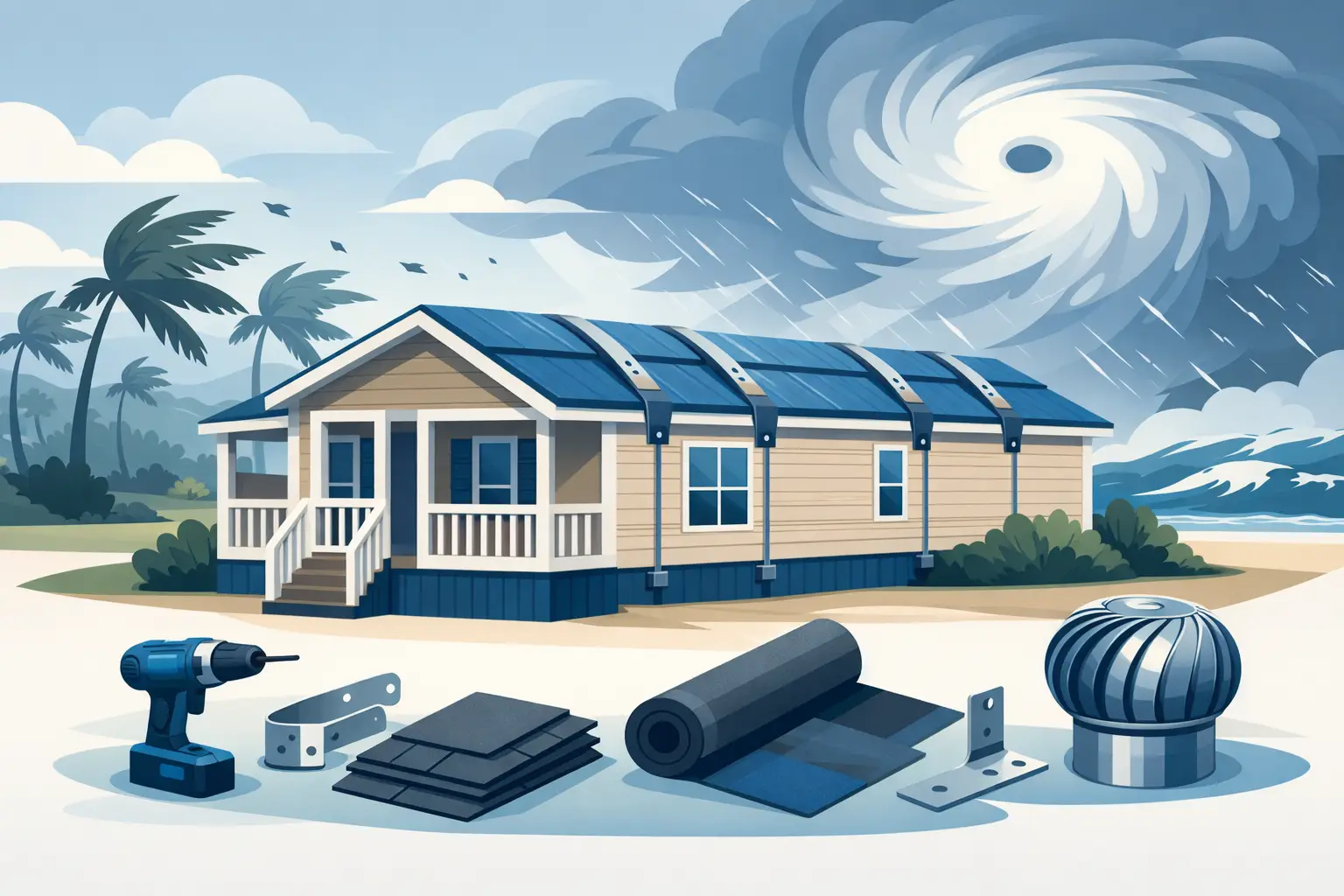
Hurricane Ready Manufactured Home Roof Essentials
A hurricane ready manufactured home roof is not simply a new layer of metal or shingles. It is a carefully fitted protection system that must handle powerful uplift, wind-driven rain, intense sun, and the specific structural needs of a manufactured home. In Florida, a roof that looks acceptable from the ground can still have weak edges, worn fasteners, or drainage problems that become costly during the next named storm.
Manufactured, mobile, and modular homes deserve roofing work designed around their dimensions, roof pitch, framing, and existing condition. A general approach can leave gaps where water enters or put unnecessary stress on the home. The right roof system provides dependable coverage while respecting how the structure was built.
What Makes a Manufactured Home Roof Hurricane Ready?
Hurricane readiness begins with the whole roof assembly, not one material alone. Wind does not only push down on a roof. As wind moves over and around a home, it can create uplift that pulls at roof panels, flashing, edges, vents, and fasteners. Once a small section loosens, wind and rain can work their way beneath it quickly.
A dependable system starts with a custom fit. Manufactured homes commonly have roof configurations and dimensions that differ from site-built homes. Their roof decks, framing layouts, eaves, and transitions need to be measured and evaluated before materials are selected. Proper detailing around the perimeter and at penetrations is just as important as the visible field of the roof.
Water management is the second part of storm protection. Florida rain often arrives sideways during a tropical storm or hurricane. A roof needs properly installed flashing, sealed transitions, and drainage that moves water away instead of letting it pool at low points. Even a minor leak can damage insulation, ceilings, wiring, and interior finishes over time.
Start With the Roof You Have
Before deciding between repair, a roof-over system, or replacement, assess the current roof honestly. Look inside the home for ceiling stains, peeling paint, soft spots, or a musty odor. Outside, watch for loose metal, rusted fasteners, cracked sealant, lifted seams, sagging areas, and debris collecting near valleys or edges.
Age matters, but condition matters more. An older roof that has been maintained may still be a candidate for a protective roof-over. A roof with widespread deterioration, active leaks, or structural concerns may need more extensive work. Adding a new system over a failing base without addressing the cause of the problem can hide damage rather than solve it.
A specialized inspection should also consider roof slope and drainage. Many manufactured homes have low-slope roofs, where standing water and deteriorated seams can become recurring concerns. Others have pitched roofs with exposed edges that need reliable wind resistance. The best recommendation depends on the home, its existing roof, and the conditions around the property.
Roofing Features That Matter in Florida Storms
A storm-conscious installation focuses on the parts most likely to fail under pressure. The roof perimeter, panel laps, flashing, and attachment points deserve particular attention because they are exposed to changing wind forces and driving rain.
Custom-fit metal roof systems are a popular option for many Florida manufactured homes because they provide durable coverage, shed water effectively, and can be designed around the home’s exact layout. Material selection should account for the roof’s shape, expected expansion and contraction, and compatibility with the existing structure. A proper fit is not a cosmetic detail. It helps prevent openings that water and wind can exploit.
Fasteners must be appropriate for the roofing system and installed correctly. Loose, corroded, misplaced, or overtightened fasteners can compromise a roof’s performance. Sealants and closures also need to be chosen for Florida heat, moisture, and ultraviolet exposure. These components may be small, but their failure can create an entry point for water.
Flashing deserves the same level of care. Areas around vents, skylights, chimneys, awnings, roof transitions, and wall connections require clean, secure details. Storm rain can travel in unexpected directions, so a roof should not depend on gravity alone to keep water out.
Roof Attachment Is Only One Part of Wind Protection
A strong roof is essential, but it works within a larger wind-resistance system. The home’s tie-downs, anchors, walls, doors, windows, and surrounding site conditions also affect overall storm safety. Roofing improvements cannot guarantee that a home will withstand every hurricane or replace the need to follow evacuation orders and local emergency guidance.
Still, a well-installed roof can reduce one of the most common sources of serious storm damage: water intrusion after wind compromises the roof covering. It is a practical investment in protecting the home and the belongings inside it.
Roof-Over or Full Replacement?
For many homeowners, this is the central decision. A roof-over installation can be an efficient option when the existing roof is stable enough to support a new protective system and the design is appropriate for the home. It may improve weather resistance, create better water shedding, and extend the roof’s service life without the disruption of a full tear-off.
However, a roof-over is not right for every situation. If the existing roof has hidden rot, significant structural problems, severe leaks, or excessive deterioration, those issues need to be addressed first. The added weight and attachment method must be evaluated carefully. Local building requirements, wind-zone considerations, and manufacturer instructions also affect what is suitable.
A full replacement can be the better long-term choice when the roof’s base condition is poor or when repairs have become repetitive. Although it may require a larger upfront investment, it can give the installer direct access to repair damaged areas and build the new system on a sound foundation. Fair pricing should never mean cutting corners on preparation, materials, or workmanship.
Maintenance Keeps Storm Protection Working
No roof is maintenance-free in Florida. Sun, humidity, salt air in coastal areas, falling branches, and seasonal storms gradually wear on roofing materials. A simple inspection schedule can help identify small concerns before hurricane season turns them into interior damage.
At least twice each year, and after a major storm, check for visible changes from the ground and inspect the interior for signs of moisture. Keep branches trimmed away from the roof, clear debris that may block drainage paths, and do not ignore a new stain or drip. Prompt service is usually less expensive and less disruptive than waiting for damage to spread.
Homeowners should avoid walking on a manufactured home roof unless it has been confirmed safe and designed to support foot traffic. Improper foot traffic can dent panels, damage coatings, disturb seals, or cause personal injury. A qualified roofing professional can inspect vulnerable areas without creating new problems.
Questions to Ask Before Hiring a Roofer
The contractor you choose matters as much as the roof system. Manufactured housing requires more than a one-size-fits-all estimate. Ask whether the roofer regularly works on manufactured, mobile, modular, and trailer homes, and whether the estimate accounts for your home’s measurements, roof shape, existing condition, and drainage needs.
You should also ask what materials and attachment methods will be used, how flashing and penetrations will be handled, and what preparation is included before installation begins. Clear answers help homeowners compare proposals based on value and long-term protection rather than price alone.
Tropical Seal focuses on roofing solutions built specifically for Florida’s non-traditional residential structures. That specialized approach helps ensure the roof fits the home, addresses its storm exposure, and provides the dependable performance homeowners expect.
A roof should give you confidence before the forecast turns serious. If you have noticed leaks, loose material, aging seams, or drainage issues, schedule an evaluation while there is time to make thoughtful decisions. The best time to strengthen your home’s first line of defense is well before the wind starts rising.