
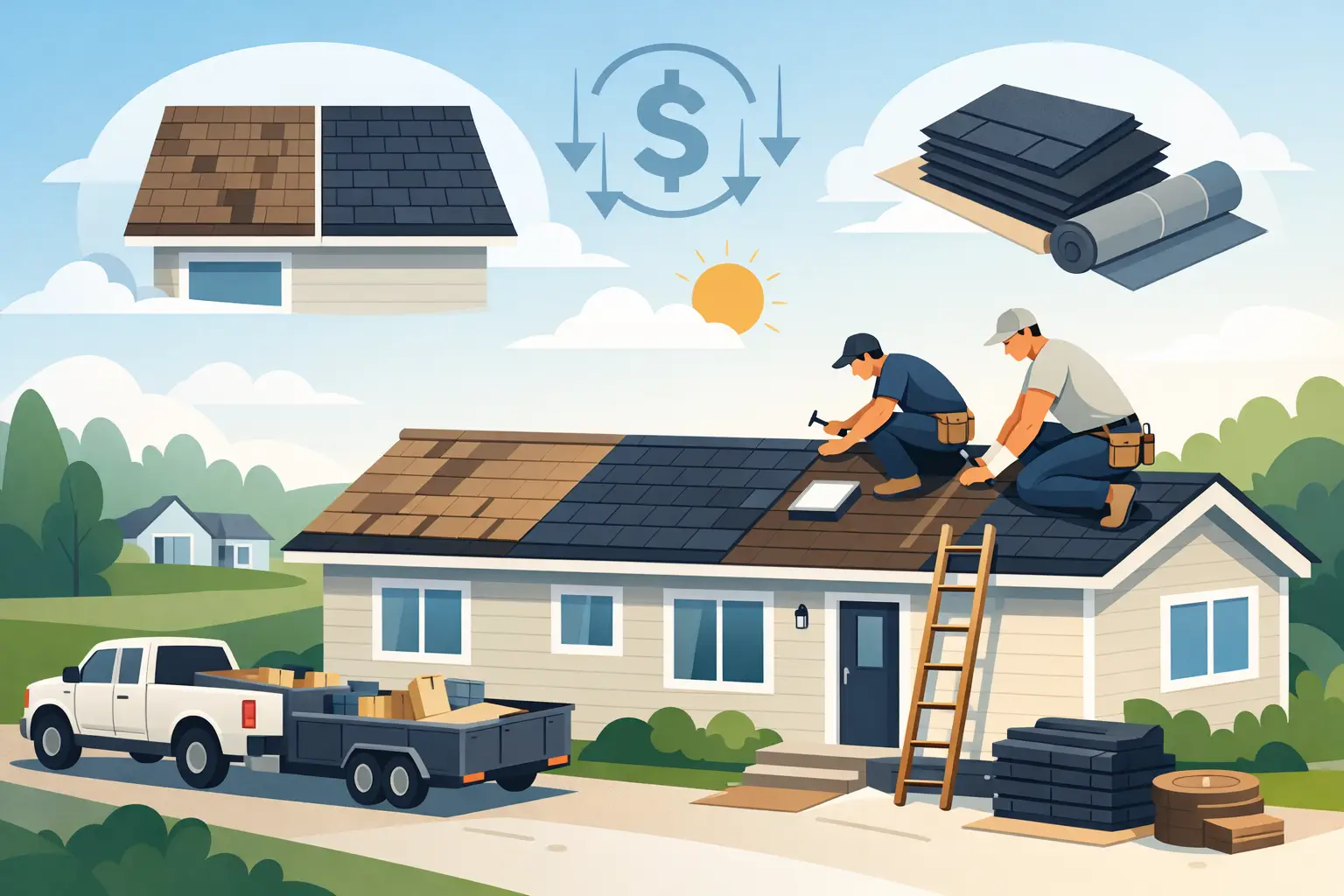
Affordable Manufactured Roof Replacement
A small ceiling stain can become a costly problem quickly in a Florida manufactured home. Water may travel along roof framing, insulation, or wall panels before it shows inside, making the original leak harder to find. An affordable manufactured roof replacement is not about choosing the lowest price. It is about choosing a properly fitted system that stops water intrusion, stands up to sun and storms, and protects the home without unnecessary work.
Manufactured, mobile, modular, and trailer homes have roofing needs that differ from conventional site-built houses. Their roof pitch, support structure, edges, penetrations, and dimensions all affect what can be installed safely and effectively. A contractor who treats every roof the same can miss the details that determine whether a new roof performs well for years or develops problems after the first hard rain.
Affordable Manufactured Roof Replacement Starts With Fit
A roof can look good from the street and still be a poor fit for the home beneath it. Manufactured homes often have low-slope or flat roof designs, lighter structural components, and unique transitions around vents, skylights, additions, and carports. The right replacement approach begins with measuring the home and evaluating the existing roof condition rather than applying a one-size-fits-all material or price.
Custom fit matters because gaps, weak edge details, and poorly sealed penetrations are common sources of leaks. A system designed around the roof’s actual dimensions can direct water away from vulnerable areas, protect the perimeter, and reduce the chance of wind-driven rain finding its way underneath the roofing material.
Affordability comes from avoiding repeat repairs. A lower initial bid may leave out necessary flashing, decking repairs, insulation improvements, or secure attachment methods. Those omissions can lead to another roofing expense sooner than expected. A clear, itemized proposal helps homeowners understand what is included and compare options fairly.
Know Whether You Need Repair, Restoration, or Replacement
Not every roof issue requires a full replacement. If the roof is structurally sound and the problem is limited to a small damaged area, a targeted repair may be the most sensible investment. Loose flashing, a failed vent seal, or localized storm damage can sometimes be corrected without replacing the entire roof.
A restoration or protective coating may be an option when the existing roof remains in good condition but needs renewed weather resistance. These systems can help seal minor surface wear and reflect heat, depending on the roof type and preparation required. They are not a cure for wet decking, major rust, failing seams, widespread deterioration, or a roof that has reached the end of its service life.
Replacement is usually the better value when leaks keep returning, materials are cracked or deteriorated across large areas, the roof has visible sagging, or prior repairs have created a patchwork of weak points. It can also make sense when a homeowner wants stronger long-term protection before hurricane season rather than waiting for the next storm to expose an aging roof.
Warning Signs That Deserve a Professional Inspection
Interior stains, soft ceiling areas, peeling wall finishes, musty odors, and drips after heavy rain all deserve attention. Outside, watch for loose trim, cracked sealant, rusted metal sections, lifted edges, damaged fasteners, and pooling water on low-slope areas.
Some warning signs are less obvious. Higher cooling bills can indicate that insulation has been affected or that the roof is absorbing more heat than it should. A roof that looks uneven may point to trapped moisture or deck concerns. An inspection gives you a better basis for deciding whether repair is still practical.
What Drives the Cost of Manufactured Home Roof Replacement?
The size of the home is part of the price, but it is not the only factor. Roof shape, pitch, existing material, access, structural condition, and the number of vents or other penetrations can all affect labor and materials. A single-wide roof with straightforward access is different from a double-wide home with additions, attached structures, or complex drainage areas.
The condition beneath the visible roof surface matters, too. If water has damaged decking, insulation, fascia, or framing components, those areas must be addressed before a new roofing system is installed. Covering over hidden damage may appear less expensive at first, but it can compromise the new roof and create larger repair needs later.
Material selection also changes the investment. The best option depends on the roof design, exposure to sun and wind, desired appearance, maintenance expectations, and budget. A qualified specialist should explain why a recommended system fits your home rather than pushing a material simply because it is commonly used on other types of properties.
Ask for Details, Not Just a Bottom-Line Price
When reviewing proposals, ask what preparation is included, how edges and seams will be protected, what happens if damaged wood is found, and how vents and other openings will be sealed. Confirm whether cleanup and removal are part of the scope. It is also wise to ask about workmanship coverage and the expected maintenance needs of the selected system.
A dependable contractor will answer directly and explain the trade-offs. For example, one roofing option may have a lower upfront cost, while another may offer better heat reflection or a longer service life. The goal is not to buy the most expensive roof. It is to make an informed decision that fits the home and the homeowner’s priorities.
Florida Weather Makes Details Non-Negotiable
Florida roofs face intense ultraviolet exposure, heavy downpours, humid conditions, and high winds. On a manufactured home, each of those conditions can put pressure on seams, roof edges, fasteners, and penetrations. A roof replacement should be designed with weather performance in mind from the start.
Proper drainage is especially important on low-slope roofs. Standing water can accelerate deterioration and reveal weaknesses in seams or coatings. Secure perimeter details matter during strong winds, while carefully sealed vents and transitions help prevent wind-driven rain from entering the roof system.
Reflective roofing options can also be worth discussing. By reducing heat absorption, the right surface may help make the home more comfortable and reduce strain on the cooling system. Results vary based on insulation, attic space, roof color, and the home’s overall condition, so it should be considered as part of the full roofing plan rather than a guaranteed energy-saving claim.
Choose a Specialist for Your Type of Home
A general roofer may be experienced with shingles on conventional houses but unfamiliar with the construction details of manufactured homes. That gap can affect measurements, attachment methods, material recommendations, and how the roof ties into existing features. Specialized experience helps ensure the solution is appropriate for the structure, not simply convenient for the installer.
Before hiring, look for a contractor who inspects the roof in person, explains the findings in plain language, and provides a written scope of work. You should feel comfortable asking questions about materials, timeline, cleanup, and what protection is being added at seams and edges. Good service includes clear communication before work begins and respect for your property throughout the project.
Tropical Seal focuses on roofing systems built for manufactured and mobile homes, with attention to custom fit, durable materials, and the demanding conditions Florida homeowners face. That specialized approach can make a meaningful difference when your roof needs more than a generic solution.
Protect the New Roof After Installation
A replacement roof is a major investment, and basic maintenance helps it perform as intended. Keep branches from rubbing against the roof, clear debris that may block drainage, and avoid walking on the roof unless necessary. After major storms, look from the ground for displaced trim, fallen branches, or visible changes around vents and edges.
Prompt attention is key if you see a new stain or notice water after a storm. Small issues are generally easier and less expensive to correct before moisture spreads into insulation or interior finishes. Keep records of inspections, repairs, and roofing work as well, especially if you may sell the home or need documentation for insurance purposes.
The right roof should bring peace of mind, not another item to worry about every time dark clouds roll in. Start with a careful inspection, ask for a solution built around your home’s exact needs, and choose protection that is designed to last through Florida’s toughest weather.