
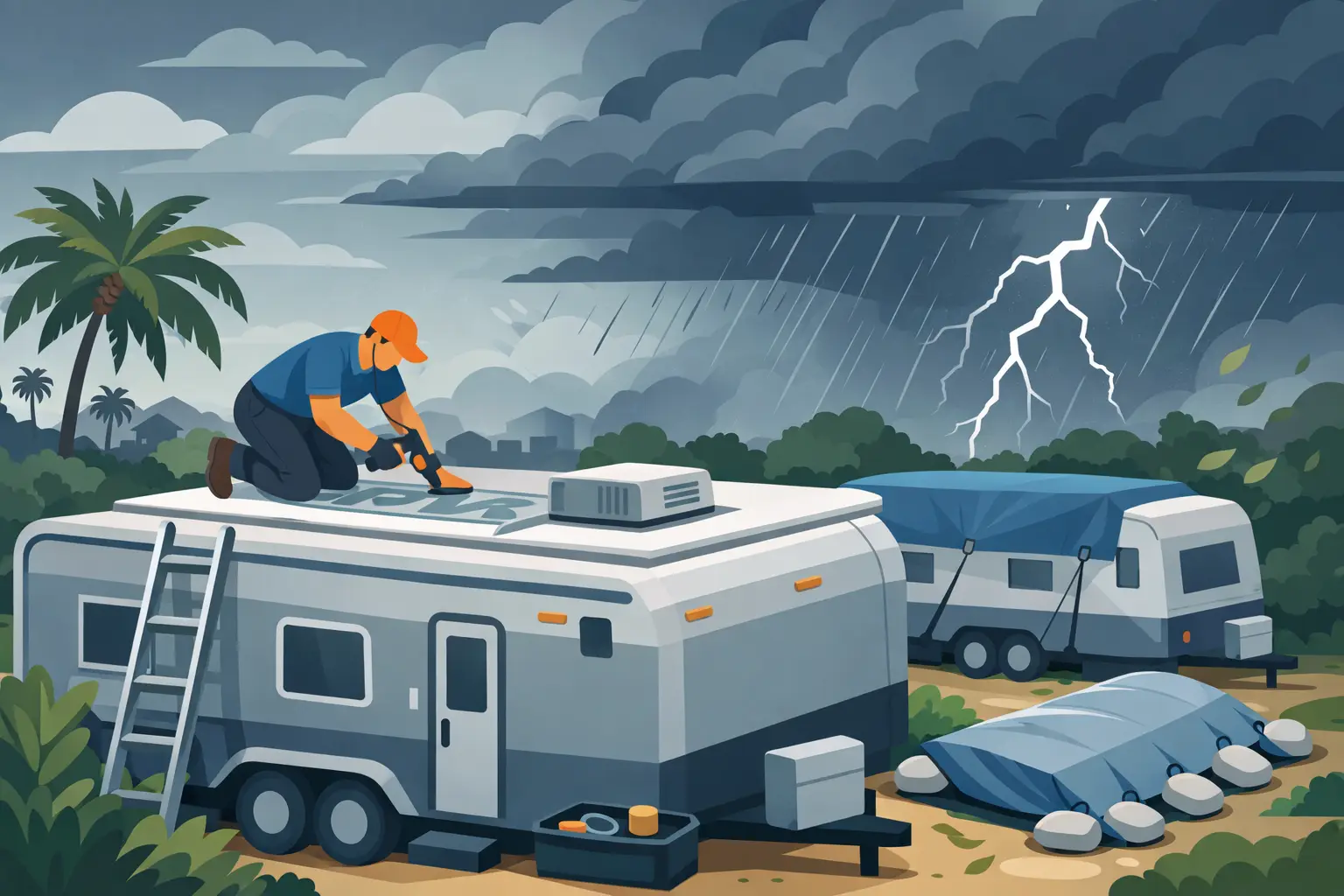
How to Prepare Trailer Roofs for Storms in Florida
A trailer roof can look fine from the ground and still be one hard rain away from a leak. Florida storms test every weak point – aging sealant, loose edge metal, clogged drains, thin roof coatings, and fasteners that have worked loose over time. Knowing how to prepare trailer roofs for storms gives mobile, manufactured, and modular homeowners a better chance of keeping wind-driven rain where it belongs: outside.
Storm preparation is not just about reacting when a hurricane is named. The most dependable protection comes from regular inspections, prompt repairs, and a roof system designed to fit the home correctly. Trailer and manufactured home roofs have different dimensions, support systems, and drainage needs than many site-built homes. They deserve specialized attention before storm season arrives.
Start With a Close Roof Inspection
The best time to find a roofing issue is when the weather is calm. Walk around the home and look for visible warning signs, including stains on ceiling panels, soft spots, peeling coating, lifted seams, rusted metal, or water running down exterior walls after rain. Indoors, check closets, vents, and the areas around ceiling fixtures for discoloration or a musty odor.
From the ground, inspect the roofline for sections that appear uneven or sagging. Look closely at the trim along the roof edges. Loose fascia, detached drip edge, and damaged gutter brackets can become wind hazards and can also allow water beneath the roofing material.
Avoid walking on the roof unless it is designed for foot traffic and you can do so safely. Many trailer roofs can be damaged by concentrated weight, especially if the decking has weakened. A professional inspection is the safer choice when the roof is older, has a history of leaks, or shows visible deterioration.
Pay Attention to Seams and Penetrations
Most leaks do not begin in the middle of a roof. They begin where materials meet. Seams, roof edges, vent pipes, skylights, air-conditioning openings, and antenna mounts all need to be sealed and secured.
Check for cracked, brittle, missing, or separated sealant around these areas. Florida heat can dry out some sealants long before a homeowner notices a problem. Once heavy rain and wind pressure arrive, water can be pushed into even a narrow opening. Re-sealing a small gap early is generally far more affordable than repairing wet insulation, ceiling panels, or structural wood later.
Clear Drainage Paths Before Heavy Rain
Standing water is a serious concern on low-slope and flat trailer roofs. It adds weight, accelerates material wear, and can find its way through weak seams. A roof should direct water toward its intended drainage path rather than hold it in shallow puddles for days.
Clean leaves, pine needles, branches, and other debris from gutters, downspouts, scuppers, and roof drains. Do not overlook debris behind rooftop equipment or along the edge where the roof meets an added awning. These areas can trap water and hide damage.
Make sure downspouts send water away from the home rather than directly beside the foundation or under the skirting. If water pools around the home after a storm, the issue may be more than the roof alone. Improving site drainage helps protect the structure from below as well as above.
Repair Small Problems Before They Become Storm Damage
A temporary patch may help during an emergency, but it is not a substitute for a proper roof repair. If you find a lifted seam, cracked coating, puncture, loose flashing, or rusted fastener, address it before storm season instead of waiting for the next forecast.
The right repair depends on the roof material. Metal roofs may need fastener replacement, seam treatment, rust control, and carefully matched sealing products. Membrane and coated roofs may require compatible patch materials and a new protective coating. Using the wrong product can reduce adhesion or trap moisture, so a specialist should confirm what is already on the roof before repairs begin.
A roof that has been patched repeatedly may be telling you something. If leaks return, the roof coating is thinning across large sections, or the roof no longer drains properly, a custom-fit replacement or protective roof-over system may offer better long-term value than another short-term repair.
Secure Roof Edges and Attached Components
Wind often attacks at roof edges first. Once wind gets under loose trim, flashing, or roofing material, it can pull on a larger section of the system. Check that edge metal is firmly fastened and that flashing around transitions is not bent, separated, or corroded.
Also inspect components that connect to or sit near the roof. Loose awnings, carports, satellite dishes, solar equipment, vents, and damaged screens can become projectiles in severe weather. Their mounting points should be secure and properly sealed. If an attachment has been added over the years, verify that it has not created a new pathway for water.
Tree limbs deserve the same attention. Trim dead or overhanging branches that could scrape the roof, clog drainage, or fall during high winds. This is particularly helpful for homes beneath oak, pine, or palm trees that shed debris throughout the year.
Know When a Roof Needs More Than Maintenance
Maintenance works best on a fundamentally sound roof. It cannot correct widespread corrosion, failing decking, persistent ponding water, or an aging roof system that has reached the end of its service life.
Consider a professional assessment if you notice recurring leaks, large areas of peeling or chalky coating, rust spots that return after treatment, interior ceiling damage, or sections of roof that flex or sag. These conditions may indicate moisture beneath the surface or structural concerns that should not be ignored.
For Florida homeowners, material selection matters as much as repair quality. A trailer roof system should be tailored to the home’s dimensions and roof shape, then installed with weather-resistant materials and careful attention to seams, transitions, and water flow. A generic approach can leave vulnerable areas behind. A custom-fit solution is designed to protect the specific home you own.
Create a Storm-Ready Routine
The most practical approach is to inspect the roof at least twice a year: once before the height of hurricane season and again after the season or any major storm. Check it sooner after a branch strike, a period of unusually heavy rain, or visible wind damage in your community.
Before an approaching storm, clear loose yard items, clean drainage paths if conditions are safe, and take photos of the roof and exterior. Documentation can be helpful if damage occurs. Do not attempt roof repairs once high winds, lightning, or heavy rain begin. At that point, personal safety comes first.
After the storm passes, inspect from the ground for missing trim, loose materials, fallen branches, standing water, and new stains inside the home. If you suspect a leak, place a container under active drips, move valuables away from the area, and arrange for a qualified inspection as soon as possible. Prompt action can limit water damage before it spreads.
How to Prepare Trailer Roofs for Storms With Specialized Help
Trailer, mobile, modular, and manufactured homes are not one-size-fits-all structures, and their roofing protection should not be either. A contractor experienced with these homes can identify concerns that a general roofer may miss, from the roof’s exact fit to the condition of its edges, seams, and support areas.
Tropical Seal helps Florida homeowners protect these specialized homes with tailored roofing solutions built for lasting weather resistance. Whether your roof needs a focused repair, renewed protective coating, or a more durable long-term system, getting clear answers before storm season can replace uncertainty with a practical plan.
A calm, dry day is the right time to give your roof the attention it needs. Address the weak spots now, and your home will be better prepared when Florida weather turns serious.