
Metal vs Rubber Mobile Roofing in Florida
A mobile home roof in Florida has to handle more than ordinary rain. It must stand up to intense sun, humid air, wind-driven storms, and long stretches of heat that can wear down weak materials quickly. When homeowners compare metal vs rubber mobile roofing, the better choice depends on the home’s roof shape, existing condition, budget, and the type of long-term protection needed.
Both systems can be effective when they are designed and installed specifically for a manufactured, modular, or mobile home. The key is not simply choosing a material. It is choosing a custom-fit roofing system that works with the structure beneath it.
Metal vs Rubber Mobile Roofing: The Main Difference
Metal roofing is typically installed as a roof-over system, often using custom-cut metal panels that create a new protective surface over the existing roof. The system may include framing, insulation, edge flashing, and carefully secured panels to help manage rain and wind exposure.
Rubber roofing usually refers to a flexible membrane system. Depending on the application, this may be an EPDM rubber membrane or another single-ply roof material suited to low-slope surfaces. It is applied over a properly prepared deck or roof surface, with seams, edges, penetrations, and drainage areas receiving close attention.
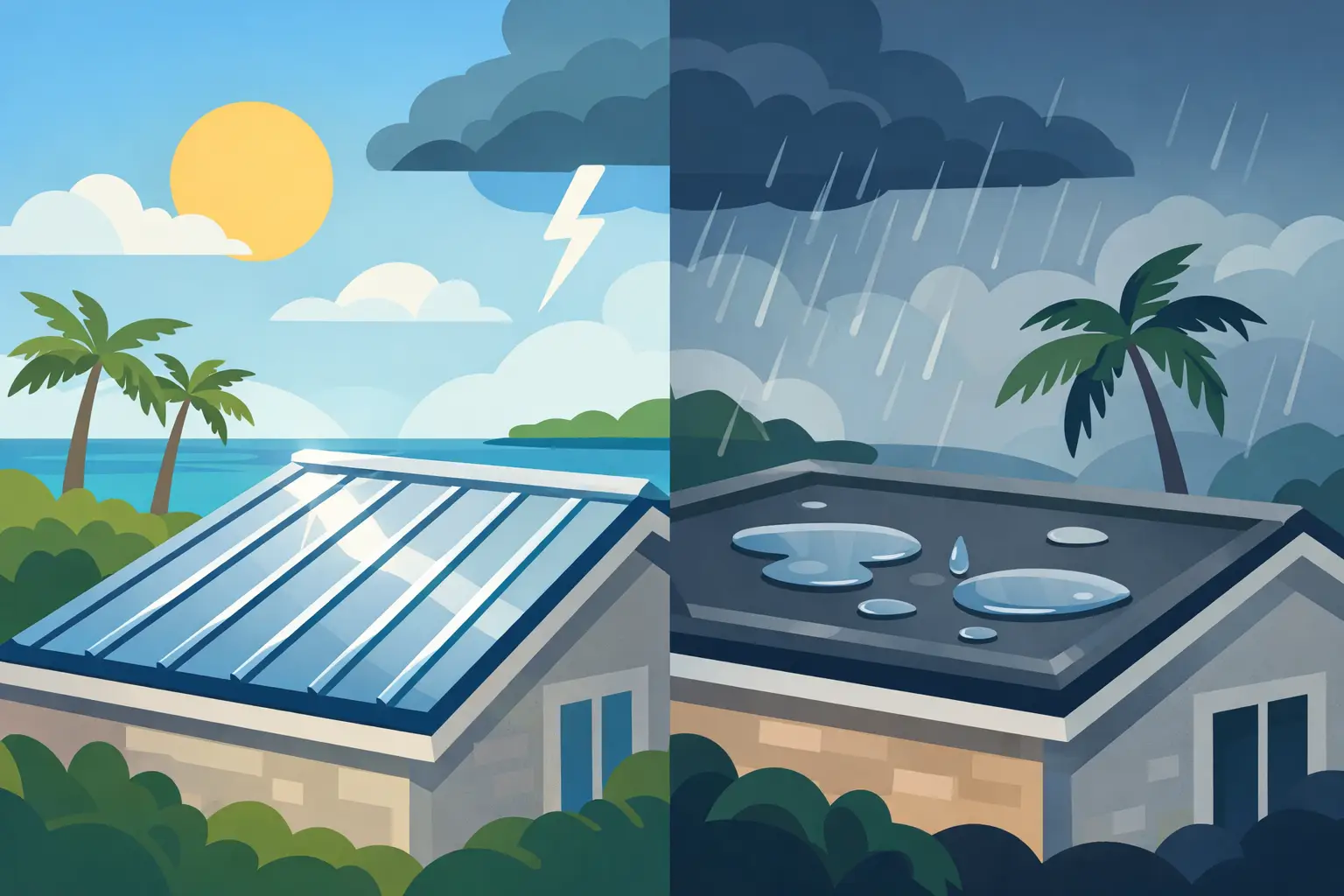
The biggest practical difference is shape and construction. Metal panels create a rigid, sloped protective layer. Rubber membranes create a continuous, flexible waterproof surface. A home with a flatter roof may be a strong candidate for a membrane system, while a homeowner seeking a roof-over with added insulation may prefer metal.
When Metal Roofing Makes Sense for a Mobile Home
Metal roofing is a popular choice for Florida mobile homes because it can provide long service life and strong protection when installed correctly. It is especially appealing for homeowners dealing with an aging roof, repeated leaks, or heat entering through the ceiling.
A properly engineered metal roof-over can improve water shedding by creating more pitch than an older flat or nearly flat roof. This can help reduce standing water concerns and move rain away from vulnerable seams. Since Florida storms can deliver heavy rainfall in a short period, effective water flow matters.
Metal can also reflect a significant amount of solar heat, particularly when lighter colors or reflective finishes are used. Combined with insulation beneath the panels, a metal roof-over may help reduce heat transfer into the home. That can make a noticeable difference for homeowners whose air conditioning runs constantly through the summer.
However, metal is not automatically the best answer for every home. It requires precise measuring, proper fastening, compatible flashing, and attention to wind uplift. A manufactured home roof has different structural considerations than a conventional site-built home. Adding a roof-over system without evaluating the existing structure, attachment points, and drainage plan can create problems rather than solve them.
Metal roofing may be the right fit when you want a long-term upgrade, improved insulation options, and a more defined slope for water runoff. It is often a strong choice for homeowners willing to invest in a durable system designed around their home’s exact dimensions.
Where Rubber Roofing Performs Well
Rubber roofing has a different advantage: it can create a continuous waterproof barrier across a low-slope roof. For many mobile and manufactured homes, that is valuable because low-pitch roofs are especially dependent on clean seams, secure edges, and dependable flashing around vents and other roof penetrations.
A quality rubber membrane is flexible, which allows it to adapt to subtle movement in the roof structure. Florida homes experience frequent temperature changes, moisture, and weather stress. A membrane system that is properly installed and maintained can offer reliable protection without adding the profile or framework of a metal roof-over.
Rubber roofing can also be a practical option when the existing roof deck is sound but the current roofing surface has reached the end of its useful life. In those cases, replacing the waterproof layer may be more appropriate than building a new roof-over system.
Still, membrane roofing is only as dependable as its installation details. Seams, perimeter edges, vent pipes, skylights, and air-conditioning penetrations must be sealed correctly. Debris should be removed regularly, and drainage should be monitored after major storms. A branch left on a low-slope roof or a neglected seam can become a leak source over time.
Rubber roofing is often a good fit for homes with low-slope roof designs, homeowners seeking a lower-profile solution, and roofs where a full roof-over is not necessary. The material itself is not a shortcut. It needs professional preparation and a system designed for Florida conditions.
Cost: Look Beyond the Initial Price
The initial cost of metal versus rubber mobile roofing can vary significantly based on roof size, current damage, insulation needs, roof shape, access, and the amount of custom flashing required. A metal roof-over often costs more upfront because it may involve framing, panels, insulation, trim, and more extensive installation work.
Rubber roofing may have a lower initial cost in some situations, particularly when the roof deck is in good condition and the project is focused on replacing the existing waterproof surface. But lower upfront cost does not always mean lower long-term cost. If drainage problems, damaged decking, or poor seam work are left unaddressed, future repairs can add up.
The most useful comparison is cost over the life of the roof. Consider how long the system is expected to perform, what maintenance it will require, whether it improves energy efficiency, and how well it addresses the reason you need a new roof in the first place. A fair quote should explain what is included, not just present a single number.
Florida Storm Protection Depends on Installation
No roofing material can compensate for poor workmanship. In Florida, wind resistance depends on proper attachment, edge security, flashing, and compatibility with the home’s structure. Water protection depends on how the roof handles transitions, seams, vents, and runoff.
For metal systems, panel fastening patterns and perimeter details are critical. Panels must be installed to accommodate the roof layout while resisting lifting forces during high winds. For rubber systems, adhesion or fastening methods, seam treatment, and edge termination all need to be completed with care.
Homeowners should also remember that an old roof may hide issues beneath the surface. Soft decking, damaged rafters, past leak areas, and loose trim should be evaluated before a new system is installed. Covering a problem without correcting it can trap moisture and shorten the life of the new roof.
Heat, Insulation, and Indoor Comfort
Florida heat is one of the most overlooked parts of a roofing decision. A roof that allows heat to build up above the ceiling can make rooms less comfortable and increase cooling costs.
Metal roof-over systems can offer a meaningful insulation opportunity because there may be space between the existing roof and the new metal surface. With the right design, that space can reduce direct heat transfer. Reflective metal finishes can further support a cooler roof surface.
Rubber membranes can also perform well in hot climates, especially in light-colored or reflective options. Their comfort benefit depends heavily on the roof assembly underneath, including insulation and ventilation where applicable. If the existing home has limited insulation, a membrane replacement alone may not deliver the same comfort improvement as an insulated roof-over.
This is why a roof inspection should include more than visible leaks. It should consider ceiling temperatures, insulation condition, signs of moisture, and the home’s overall roof design.
How to Choose the Right System
The right answer usually becomes clearer after a close look at four areas: the roof’s slope, the condition of the existing deck, the home’s structural needs, and your long-term goals. A low-slope roof with sound decking may be well suited to a quality membrane system. A home with recurring leaks, excessive heat, or a worn-out roof surface may benefit more from a custom metal roof-over.
Do not base the decision on material names alone. Ask how the system will fit your specific mobile or manufactured home, how water will drain, how wind exposure will be addressed, and what work will be completed around vents, edges, and damaged areas. Specialized contractors understand that these homes require measurements and installation methods that differ from standard residential roofing.
Tropical Seal approaches mobile home roofing with that level of attention, helping Florida homeowners select custom-fit protection that matches their home rather than forcing a one-size-fits-all solution.
Before committing to either option, take time to have the roof evaluated after a dry day and again following heavy rain if possible. The right roofing system should give you more than a new surface overhead. It should give you confidence when the next Florida storm rolls in.